
- Home
- Electronics
- Smart Home Devices
- Smart Lighting Ecosystems: Phi ...


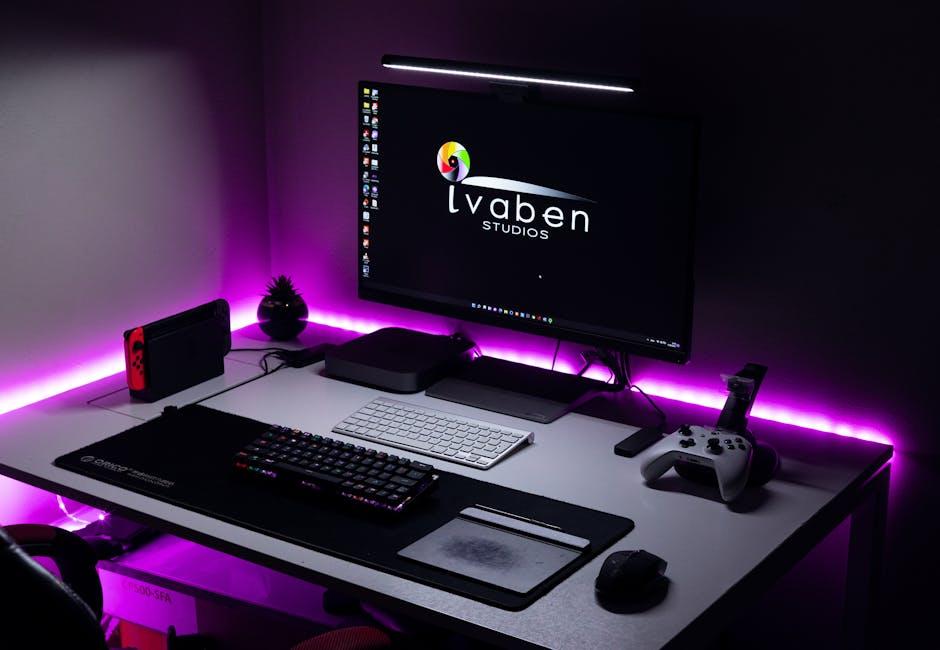
Smart lighting is frequently the foundational gateway into home automation. The ability to transform the emotional ambiance of a room—transitioning from focused 5000K crisp white light during morning work hours to rich, cinematic 2200K sunset tones and ambient RGB wall washing at dusk—dramatically improves mood, sleep hygiene, and visual comfort.
However, the smart lighting marketplace is starkly divided among three reigning powerhouses, each embracing radically different technical architectures, price points, and aesthetic philosophies. Philips Hue remains the prestigious, ultra-reliable luxury standard built on dedicated Zigbee hub coordination. Nanoleaf champions geometric modular wall art and cutting-edge Matter-over-Thread interoperability. Govee dominates dynamic gaming immersion, camera-based TV backlighting, and aggressive value pricing. In this exhaustive illumination shootout, we evaluate color reproduction accuracy, wireless protocol stability, TV screen mirroring, and long-term cost.
Table of Contents
- Wireless Architecture: Dedicated Zigbee Hub vs Matter over Thread vs Wi-Fi
- Color Accuracy, Dimming Curves, and Color Rendering Index (CRI)
- TV Screen Backlighting Sync: HDMI Box vs Top-Mounted Camera
- Form Factors & Architectural Fixtures: Bulbs, Wall Panels, and Outdoor Lineups
- Cost of Ownership: Premium Investment vs Budget Value
- The Master Smart Lighting Decision Matrix & Verdict
- In Conclusion

Wireless Architecture: Dedicated Zigbee Hub vs Matter over Thread vs Wi-Fi
The reliability of your smart lighting hinges entirely on the underlying wireless mesh protocol. As detailed in our Smart Glasses and Audio Eyewear: Ray-Ban Meta vs Solos vs Bose Frames analysis, when a homeowner installs 30 or 40 smart bulbs across multiple rooms, cheap Wi-Fi-based bulbs can quickly cripple consumer home routers.
Philips Hue relies on a dedicated Hue Bridge operating on the industrial-grade Zigbee 3.0 standard. Because Hue bulbs communicate on an isolated Zigbee radio frequency completely separated from your home Wi-Fi network, your router experiences zero congestion. Every Hue bulb acts as a Zigbee mesh repeater, delivering instantaneous 50ms light transitions and 99.99% command reliability across large multi-story homes.
Nanoleaf was an early pioneer in adopting Matter over Thread. Mains-powered Nanoleaf Essentials bulbs and lightstrips build a self-healing Thread mesh that interfaces directly with universal border routers (like Apple TV 4K or Nest Hub), eliminating brand-specific bridge hubs.
Govee primarily utilizes dual-band Wi-Fi (2.4GHz) and Bluetooth. While Govee products require no proprietary hubs and are remarkably easy to set up out of the box, installing dozens of individual Govee fixtures will occupy substantial IP address real estate on your home router.
| Lighting Ecosystem | Wireless Protocol | Requires Proprietary Hub? | Max Devices per Network | Latency / Response Time |
|---|---|---|---|---|
| Philips Hue | Zigbee 3.0 (Hue Bridge) + Bluetooth | Yes (Hue Bridge required for full features) | 50 Bulbs & 12 Accessories per Bridge | Sub-50ms (Instantaneous, zero Wi-Fi load) |
| Nanoleaf (Essentials & Panels) | Matter over Thread + Wi-Fi | No (Uses any Thread Border Router) | Unlimited on Thread Mesh | Sub-100ms (Very fast local mesh) |
| Govee (Immersion & Strips) | Wi-Fi (2.4GHz) + Bluetooth BLE | No (Direct Wi-Fi connection) | Constrained by router DHCP limits | 150ms – 400ms (Slight cloud latency) |
Color Accuracy, Dimming Curves, and Color Rendering Index (CRI)
Not all light photons are created equal. Cheap LED bulbs emit narrow, spikey spectral wavelengths that make human skin look sickly green and furniture appear dull and washed out. High-end lighting is judged by its Color Rendering Index (CRI) and ultra-deep dimming performance.
Philips Hue sets the gold standard for acoustic and optical engineering. Hue White & Color Ambiance bulbs feature custom phosphor formulations yielding a CRI exceeding 90 across all white color temperatures (from 2000K candle warm to 6500K daylight). Furthermore, Hue’s logarithmic dimming curves allow smooth, flicker-free dimming down to an astonishing 0.2% brightness—delivering authentic candle-like warmth without buzzing.
Govee optimizes its LED diode chemistry for intense, saturated, neon ‘party’ hues. Govee’s blues, greens, and magentas are extraordinarily vivid and bright, making them the favorite of video game streamers and teenage bedrooms. However, Govee’s warm whites can look slightly unnatural, and dimming below 5% brightness exhibits step-down flickering.
Nanoleaf delivers balanced color reproduction with strong color temperatures, though its geometric wall panels are primarily designed for direct aesthetic wall display rather than illuminating an entire room.
| Ecosystem | Color Rendering Index (CRI) | Deep Dimming Range | White Color Spectrum | Primary Optical Strength |
|---|---|---|---|---|
| Philips Hue | CRI 90+ across all kelvins | Smooth down to 0.2% (No flicker) | 2000K – 6500K (True candle to daylight) | Natural skin tones, architecture, cozy living spaces |
| Govee | CRI 80 – 85 | Dims to ~3% (Minor stepping at bottom) | 2700K – 6500K | Ultra-saturated, blindingly vibrant neon RGB colors |
| Nanoleaf | CRI 88+ | Smooth down to 1% | 2200K – 6500K | Even diffusion across frosted acrylic wall panels |

TV Screen Backlighting Sync: HDMI Box vs Top-Mounted Camera
Immersive entertainment lighting—where ambient LED strips behind your TV dynamically mirror the dominant colors displayed on your television screen—creates an extraordinary visual sense of a borderless display.
Philips Hue achieves screen sync via the Hue Play HDMI Sync Box 8K. Because the HDMI box sits physically between your streaming device (Apple TV, PS5, Xbox) and your TV, it digitally intercepts the raw uncompressed video stream. The resulting light synchronization is instantaneous (under 10ms lag), completely color-accurate, and hidden behind your entertainment console with zero hardware visible on your TV frame.
Govee champions the Envision / DreamView Camera System. An ultra-wide camera is mounted on top of your television frame, physically watching the TV screen and translating pixel colors to an addressable RGBIC backstrip. While this introduces a tiny 50ms processing lag and can be thrown off by ambient room lamp glare reflecting off glossy OLED glass, Govee’s camera system costs under $90 and functions on *all* content—including built-in smart TV apps (Netflix, YouTube) that HDMI boxes cannot touch.
| Sync Solution | Technology Method | Input Lag | Works with TV Built-In Apps? | System Price Tier |
|---|---|---|---|---|
| Philips Hue Play HDMI Sync Box 8K | Hardware HDMI 2.1 video pass-through | Under 10ms (Indistinguishable lag) | No (Requires external HDMI source: Apple TV/PS5) | $349 + Hue Lightstrip ($450+ Total) |
| Philips Hue Sync TV App (Samsung/LG) | Direct software app on Smart TV OS | Under 15ms (Clean digital sync) | Yes (Works on all internal TV apps) | $129 (One-time app license) + Lightstrip |
| Govee DreamView T2 / Envision | Top-mounted dual-camera optical capture | 40ms – 60ms (Slight noticeable lag) | Yes (Watches physical screen surface) | $89 – $139 (Complete kit with strip included) |
| Nanoleaf 4D Screen Mirror | Screen-facing camera + Lightstrip kit | 50ms lag | Yes (Camera optical capture) | $99 – $129 (Complete kit) |
Form Factors & Architectural Fixtures: Bulbs, Wall Panels, and Outdoor Lineups
Beyond standard A19 and BR30 ceiling can bulbs, each brand has carved out distinct architectural specialties.
Philips Hue excels in premium architectural lighting: offering luxury pendant lamps, recessed downlights, integrated LED floor lamps (Hue Signe), and an extensive Outdoor 24V Low-Voltage Lineup (heavy-duty waterproof garden spotlights, wall lanterns, and path lights) that can withstand blizzard temperatures and torrential downpours.
Nanoleaf owns the modular geometric decorative art space. Their hexagonal Shapes, wooden-finish Elements, and three-dimensional Lines attach to drywall using non-destructive command strips, creating sculptural living art installations that react dynamically to music rhythms and touch gestures.
Govee dominates functional room styling: offering affordable RGBIC floor lamps, neon rope lights that can be bent into custom shapes on walls, curtain lights with programmable pixel animations, and permanent outdoor soffit holiday lighting.
| Fixture Category | Philips Hue Offerings | Nanoleaf Offerings | Govee Offerings |
|---|---|---|---|
| Standard Screw-in Bulbs | A19, BR30, GU10, E12 Candle (CRI 90+) | A19, GU10 (Matter-over-Thread) | A19, BR30, GU10 (Wi-Fi) |
| Modular Wall Decor Panels | None (Focuses on functional lighting) | Shapes, Elements (Wood), Canvas, Lines | Glide Wall Light bars, Hexa panels |
| Flexible Lightstrips | Hue Gradient Lightstrip (Addressable zones) | Matter Essentials Lightstrip | RGBIC Neon Rope & Ultra-Density Strips |
| Outdoor & Landscape | Extensive (Low-voltage 24V spotlights & paths) | Outdoor String Lights (Matter) | Permanent Outdoor Eaves & Garden lights |

Cost of Ownership: Premium Investment vs Budget Value
Outfitting an entire home with smart illumination requires balancing budget realities against build quality and lifespan. Philips Hue components carry an undeniable luxury price tag: a single Hue White & Color Ambiance bulb costs $55 to $65, and outfitting a large home with 40 bulbs, switches, and outdoor floodlights can easily exceed $2,500.
However, Hue bulbs feature premium thermal heat dissipation fins and are rated for 25,000 hours of continuous operation (over 20 years of normal use). Their software support is legendary: Philips Hue bridges and accessories from a decade ago continue to receive firmware updates and security patches.
Govee represents the polar opposite philosophy: a four-pack of Govee smart bulbs costs barely $35 ($9 per bulb). While their plastic casings run slightly hotter and software animations can feel crowded with community presets, Govee delivers 80% of the visual fun at barely 25% of the cost.
| Ecosystem | Average Bulb Price | Cost to Outfit 10-Bulb Room | Rated LED Lifespan | Software Longevity |
|---|---|---|---|---|
| Philips Hue | $50 – $65 per bulb | $550 – $650 (+ $60 Bridge) | 25,000 Hours (22+ Years) | 10+ Years of ongoing firmware support |
| Nanoleaf (Essentials) | $19 – $25 per bulb | $200 – $250 (No hub needed) | 25,000 Hours | Regular Matter & Thread firmware updates |
| Govee | $9 – $14 per bulb | $90 – $130 (Direct Wi-Fi) | 15,000 – 20,000 Hours | Frequent app updates; frequent new SKU churn |
The Master Smart Lighting Decision Matrix & Verdict
Selecting the ideal smart lighting brand comes down to your aesthetic goals, architectural permanence, and willingness to invest in infrastructure. The three brands excel in distinctly different domains.
Philips Hue remains our #1 Editor’s Choice for discerning homeowners, multi-story residences, and luxury renovations. Its dedicated Zigbee hub architecture guarantees zero network congestion, its CRI 90+ white tones flatter human skin, and its deep 0.2% dimming curve creates unmatched evening serenity.
Nanoleaf is the champion of modular geometric wall decor and modern Matter-over-Thread smart homes. And for gaming dens, high-energy entertainment setups, and budget-conscious tech enthusiasts who crave vibrant, pulsating neon immersion, Govee delivers unbeatable value.
| Rank & Brand | Ideal User & Setting | Key Strength | Price Tier | Overall Score |
|---|---|---|---|---|
| 1. Philips Hue | Discerning Homeowners & Living Rooms | Flawless Zigbee reliability, CRI 90+, 0.2% dimming | Premium ($$$$) | 9.8 / 10 (Gold Standard) |
| 2. Govee | Gamers, Streamers & Budget Enhancements | Incredible value, blinding RGB saturation, camera TV sync | Affordable ($) | 9.3 / 10 (Best Value) |
| 3. Nanoleaf | Creative Spaces & Modular Wall Art | Shapes geometric panels, Matter-over-Thread native | Mid-Tier ($$$) | 9.1 / 10 (Best Decor) |
| 4. LIFX | Wi-Fi Purists wanting high lumens | Blinding 1100 lumens per bulb without a bridge | Mid-High ($$$) | 8.6 / 10 (High Output) |
✓ What We Love
- Philips Hue Zigbee hub architecture ensures rock-solid 50ms reliability without cluttering home Wi-Fi networks
- Hue provides industry-leading CRI 90+ color fidelity and flicker-free 0.2% deep candle-light dimming
- Govee DreamView camera-based TV backlighting provides immersive screen-sync on all streaming apps for under $90
- Nanoleaf geometric wall panels combine functional illumination with modern modular artistic wall sculpture
- Nanoleaf Matter-over-Thread accessories pair directly to universal border routers without proprietary hubs
✗ Things to Consider
- Philips Hue is prohibitively expensive; outfitting an entire home with bulbs and switches costs thousands
- Large installations of Wi-Fi-based Govee bulbs can overwhelm budget consumer Wi-Fi routers
Price Comparison
Looking for the Best Deals on Smart Lighting & Ambient LED Ecosystems?
Don’t overpay. Compare real-time prices across major online retailers before buying.
In Conclusion
Lighting is the single most powerful architectural tool to alter the mood, perception, and emotional comfort of your living space. Replacing static incandescent bulbs with intelligent, circadian-aware smart fixtures elevates everyday living into an art form.
Whether you invest in the timeless luxury and Zigbee reliability of Philips Hue, the sculptural geometric imagination of Nanoleaf, or the high-energy entertainment thrills of Govee, introducing smart illumination will make you fall in love with your home all over again.