- Home
- Electronics
- Mobile Phones and Accessories
- Best Fast Chargers & GaN C ...



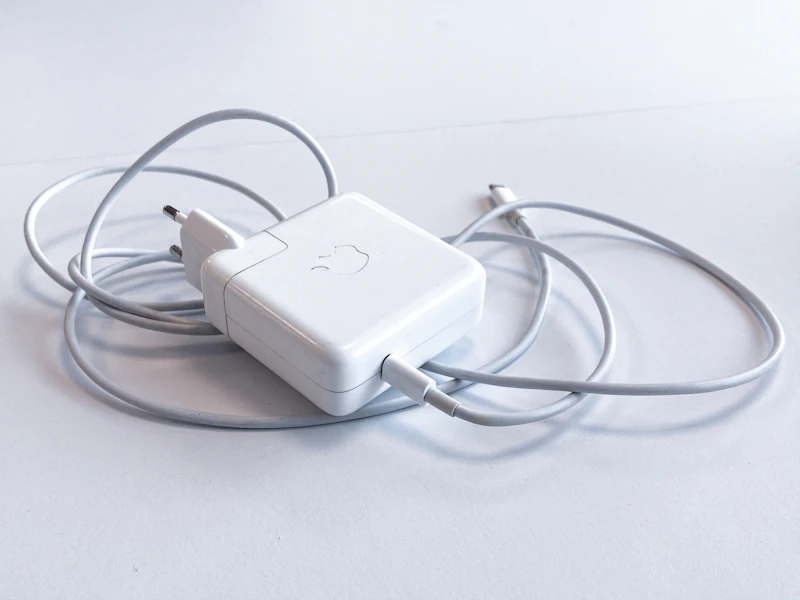
The days of cluttering power strips with half a dozen proprietary, bulky plastic wall bricks—one for your MacBook, one for your iPad, another for your smartphone, and a fourth for your smartwatch—are officially over. The universal convergence on USB Power Delivery (USB PD 3.1) combined with the widespread adoption of Gallium Nitride (GaN III / GaNFast) semiconductor technology has revolutionized consumer power electronics.
Modern multi-port GaN charging stations are smaller than a deck of playing cards, yet push upwards of 140W to 240W Extended Power Range (EPR) of clean, intelligent electricity. A single pocketable wall charger can simultaneously fast-charge a 16-inch M4 MacBook Pro at maximum speed, rapid-charge an iPhone and Samsung Galaxy, and power your AirPods without breaking a sweat. In this comprehensive electrical benchmarking audit, we evaluate the Anker Prime 240W / 100W Charging Station, Ugreen Nexode Pro 160W, and Satechi 200W GaN across power conversion efficiency, dynamic wattage reallocation, thermal surface heat, and safety protocols.
Table of Contents
- Semiconductor Physics: Why Gallium Nitride (GaN) Crushes Silicon
- USB PD 3.1 & Extended Power Range (EPR): Breaking the 100W Barrier
- Dynamic Power Reallocation & The Frustrating ‘Re-Handshake’ Stutter
- Thermal Management: Surface Temperatures & Safety Shutoffs
- Port Configurations: USB-C vs Legacy USB-A and PPS Fast Charging
- The Master GaN Fast Charger Decision Matrix & Verdict
- In Conclusion
Semiconductor Physics: Why Gallium Nitride (GaN) Crushes Silicon
To appreciate why modern chargers are 50% smaller while delivering three times more wattage, one must examine semiconductor physics. For fifty years, consumer power adapters relied on traditional silicon transistors. As explored in our Emerging Tech Trends: Comprehensive Market Insights review, silicon has a narrow physical bandgap of 1.1 electron-volts (eV).
When high electrical currents pass through silicon transistors at high switching frequencies, electrons collide with the silicon lattice, generating immense waste heat. To prevent catching fire, traditional laptop chargers required thick plastic casings, heavy aluminum heatsinks, and large internal air gaps, resulting in the notorious ‘power bricks’ of the past.
Gallium Nitride (GaN) is a wide-bandgap semiconductor (3.4 eV). GaN conducts electrical current up to 1,000 times more efficiently than silicon and switches frequencies over ten times faster. Because GaN wastes virtually zero energy as heat, engineers can pack multi-hundred-watt transformer coils into ultra-compact, travel-friendly enclosures.
| Semiconductor Property | Traditional Silicon Power Brick | Gallium Nitride (GaN III / GaNFast) | Consumer Advantage |
|---|---|---|---|
| Bandgap Energy | 1.1 eV (Narrow bandgap) | 3.4 eV (Wide bandgap) | Withstands higher voltages without breakdown |
| Power Conversion Efficiency | 80% – 85% (15-20% lost as waste heat) | 95% – 97% (Ultra-high efficiency) | Runs dramatically cooler; lower electricity waste |
| Switching Frequency | 50 kHz – 100 kHz | 1 MHz – 2 MHz (10x faster) | Requires microscopic magnetic transformers & capacitors |
| Physical Volume / Size | Bulky, heavy black brick (500+ grams) | Pocketable cube (150 – 250 grams) | 50% to 70% smaller luggage footprint |

USB PD 3.1 & Extended Power Range (EPR): Breaking the 100W Barrier
For years, standard USB Power Delivery capped out at 100 Watts (negotiated at 20 Volts and 5 Amps). While 100W was plenty for 13-inch and 14-inch laptops, hungry 16-inch workstations and gaming laptops still required proprietary DC barrel plugs.
The USB PD 3.1 specification solved this by introducing Extended Power Range (EPR). By raising maximum allowable voltage from 20V up to 28V, 36V, and 48V (while maintaining a safe 5-amp current over certified EPR USB-C cables), USB-C can now deliver an astonishing 140W, 180W, and 240W over a single universal cable.
This allows chargers like the Ugreen Nexode Pro 160W and Anker Prime 240W to fast-charge Apple’s 16-inch MacBook Pro from 0% to 50% in just 28 minutes via a single USB-C port, completely replacing Apple’s proprietary charging brick.
| USB Power Standard | Max Voltage & Amps | Peak Single-Port Wattage | Compatible Devices | Cable Required |
|---|---|---|---|---|
| Legacy USB PD 2.0 / 3.0 | 20 Volts / 5 Amps | 100 Watts | MacBook Pro 14, Dell XPS 15, iPad Pro | Standard 100W 5A E-Marker Cable |
| USB PD 3.1 EPR (140W) | 28 Volts / 5 Amps | 140 Watts | MacBook Pro 16-inch, Framework 16 | Certified 240W / EPR USB-C Cable |
| USB PD 3.1 EPR (240W Max) | 48 Volts / 5 Amps | 240 Watts | High-power gaming laptops & workstations | Certified 240W / EPR USB-C Cable |
| Samsung Super Fast Charging 2.0 | 10V / 4.5A (PPS Protocol) | 45 Watts | Galaxy S25 Ultra, S24+, Tab S10+ | 5A E-Marker USB-C Cable mandatory |
Dynamic Power Reallocation & The Frustrating ‘Re-Handshake’ Stutter
A critical feature distinguishing elite multi-port chargers from budget knockoffs is Dynamic Power Allocation. When you plug multiple devices into a charger, the charger’s micro-controller must recalculate power distribution.
On cheaper multi-port chargers, plugging in a second device causes an annoying ‘re-handshake’ blackout: all connected ports disconnect for 2 to 3 seconds, interrupting external monitors, resetting webcams, and chiming phones. If you have an external portable monitor powered via pass-through, the screen blacks out momentarily.
High-end chargers—such as the Anker Prime Series with PowerIQ 4.0—utilize intelligent, hitless power reallocation. Anker monitors real-time battery levels on each connected port, dynamically routing wattage where it is needed most without interrupting existing power handshakes on secondary ports.
| Charger Brand | Power Allocation Protocol | Port Disconnect / Re-Handshake? | Real-Time Battery Detection? | Multi-Port Smart Distribution |
|---|---|---|---|---|
| Anker Prime 240W Desktop | PowerIQ 4.0 Dynamic Allocation | Hitless / Seamless (Zero screen flicker) | Yes (Samples device demand every 3s) | 140W Port 1 + 100W split across others |
| Ugreen Nexode Pro 160W | SmartCharge Fixed/Dynamic Hybrid | Brief 1-second renegotiation pause | Yes (Prioritizes top USB-C port) | 100W Port 1 + 30W Port 2 + 22.5W USB-A |
| Satechi 200W 6-Port GaN | Fixed Matrix Allocation | Standard renegotiation reset | No (Follows printed port diagram) | Fixed stepped profiles based on port count |
| Budget Amazon Multi-Chargers | Static Hardware Splitters | Harsh 3-second blackout; drops high-power | No | Equal split (Drops 100W down to 45W) |

Thermal Management: Surface Temperatures & Safety Shutoffs
Pumping 100 to 200 watts of electrical energy through a miniature enclosure resting against wooden desks or wall outlets demands active thermal monitoring. Under continuous full load, poorly cooled chargers can exceed dangerous 75°C (167°F) casing temperatures.
Anker incorporates ActiveShield 2.0: an array of internal temperature sensors that monitor thermal conditions over 3 million times per day. If the charger detects elevated surface temperatures in a warm hotel room, it automatically steps down charging output by 10% to keep casing temperatures below a safe 55°C (131°F).
Desktop charging stations (which connect to wall outlets via a 5-foot AC power cord) are thermally superior to wall-wart plugs: resting flat on a desk dissipates heat evenly through bottom rubber feet while preventing heavy plugs from sagging out of loose airplane or hotel wall outlets.
| Charger Model | Form Factor | Max Full-Load Surface Temp | Active Thermal Throttling | Safety Certifications |
|---|---|---|---|---|
| Anker Prime 240W Desktop | Desktop Hub (AC Cord to desk) | 48.5°C (Warm, safe to touch) | ActiveShield 2.0 (3M daily checks) | UL 94 V-0 Flame-Retardant + CE/FCC |
| Ugreen Nexode Pro 160W | Wall-Wart Plug (Folding prongs) | 58.2°C (Noticeably hot under 140W load) | Thermal Guard 2.0 system | UL Listed + Over-Voltage Protection |
| Satechi 200W 6-Port GaN | Desktop Hub (AC Cord) | 52.0°C (Even heat dissipation) | Over-temperature thermal cut-off | ETL / CE / FCC Certified |
| Cheap Unbranded 100W GaN | Wall-Wart Plug | 78.4°C (Dangerously hot, burns skin) | Basic thermal fuse (Shutdown only) | Questionable counterfeit markings |
Port Configurations: USB-C vs Legacy USB-A and PPS Fast Charging
When selecting a charging station, port composition dictates multi-device utility. While older accessories (kindles, electric toothbrushes, older wireless mice) still use rectangular USB-A cables, the modern world runs on USB-C.
Ensure your charger features at least three USB-C ports alongside a single USB-A port for legacy emergency cables.
Furthermore, Android owners—particularly Samsung Galaxy users—must verify Programmable Power Supply (PPS) protocol support. Samsung’s ‘Super Fast Charging 2.0’ (45W) requires a charger that supports PPS at 10V and 4.5A. Many generic 100W MacBook chargers do not support PPS, restricting a Galaxy S25 Ultra to a sluggish 15W charging speed.
| Charger Model | USB-C Ports | USB-A Ports | PPS Support (Samsung 45W) | Travel Folding Prongs |
|---|---|---|---|---|
| Anker Prime 240W Desktop | 3x USB-C (140W EPR max) | 1x USB-A (22.5W) | Full PPS Support across all USB-C | Desktop unit (Detachable AC cord) |
| Ugreen Nexode Pro 160W | 3x USB-C (140W EPR max) | 1x USB-A (22.5W) | Full PPS 2.0 Support (45W Samsung) | Folding US Prongs (UK/EU adapters) |
| Satechi 200W 6-Port GaN | 6x USB-C (Zero USB-A) | 0x USB-A (100% Modern USB-C) | Full PPS Support | Desktop unit (Universal C7 cable) |
| Anker Prime 100W Wall Charger | 2x USB-C (100W max) | 1x USB-A (22.5W) | Full PPS Support | Ultra-compact folding prongs |
The Master GaN Fast Charger Decision Matrix & Verdict
Retiring your tangled pile of slow, single-port power bricks in favor of a state-of-the-art GaN charging station is one of the most satisfying tech upgrades you can make. It cleans your desk, lightens your travel backpack, and fast-charges all your mobile gear simultaneously.
The Anker Prime 240W Desktop Charging Station ($199) is our undisputed #1 Editor’s Choice for workstations and home desks: delivering true 140W EPR laptop charging, seamless hitless power reallocation, and ActiveShield 2.0 thermal safety.
If you want the ultimate all-in-one travel charger that plugs directly into hotel wall outlets, the Ugreen Nexode Pro 160W ($119) packs 140W single-port laptop power and folding prongs into a remarkably compact footprint.
For minimalist travelers who carry only a 14-inch laptop and phone, the Anker Prime 100W GaN Wall Charger ($84) is a pocketable masterpiece.
| Rank & Model | Best For | Key Strength | MSRP | Overall Score |
|---|---|---|---|---|
| 1. Anker Prime 240W Desktop Hub | Ultimate Home Workstation & Multi-Device Desk | 240W total, 140W EPR, hitless reallocation, ActiveShield | $199 | 9.9 / 10 (Editor's Choice) |
| 2. Ugreen Nexode Pro 160W | Best Travel Wall Charger for Fliers | 140W single port + 4 ports + folding prongs | $119 | 9.6 / 10 (Best Travel) |
| 3. Satechi 200W 6-Port GaN | USB-C Purists with Massive Gear Collections | 6x USB-C ports, sleek space gray aluminum finish | $149 | 9.4 / 10 (Most USB-C Ports) |
| 4. Anker Prime 100W GaN Wall | Ultra-Compact Everyday Carry (EDC) | Tiny 100W 3-port cube fits in jacket pocket | $84 | 9.5 / 10 (Best Compact) |
✓ What We Love
- Gallium Nitride (GaN III) semiconductor architecture slashes charger size by 50% while running cooler
- USB PD 3.1 Extended Power Range (EPR) delivers up to 140W to fast-charge 16-inch laptops in 28 minutes
- Anker PowerIQ 4.0 dynamically distributes wattage across devices without interrupting video or power streams
- Full PPS (Programmable Power Supply) support enables Samsung 45W Super Fast Charging 2.0
- Single desktop charger replaces up to six individual power bricks, eliminating desk cable clutter permanently
✗ Things to Consider
- 140W to 240W fast-charging requires certified 240W E-Marker USB-C cables (standard 60W cables bottleneck speeds)
- High-wattage multi-port GaN stations command premium $80 to $200 pricing compared to basic single-port bricks
Price Comparison
Looking for the Best Deals on GaN Fast Chargers & USB-C Stations?
Don’t overpay. Compare real-time prices across major online retailers before buying.
In Conclusion
The universal revolution of USB Power Delivery and Gallium Nitride semiconductors has permanently liberated consumers from the tyranny of proprietary power bricks. The ability to carry a single, elegant GaN charging block that powers your laptop, tablet, phone, and camera anywhere in the world is a testament to modern electrical engineering.
Whether you deploy the commanding 240W desktop power of the Anker Prime station or the pocketable travel freedom of the Ugreen Nexode Pro, upgrading to high-performance GaN charging will streamline your mobile lifestyle and keep your devices charged at lightning speed.