- Home
- Electronics
- Smart Home Devices
- Best Baby Monitors 2026


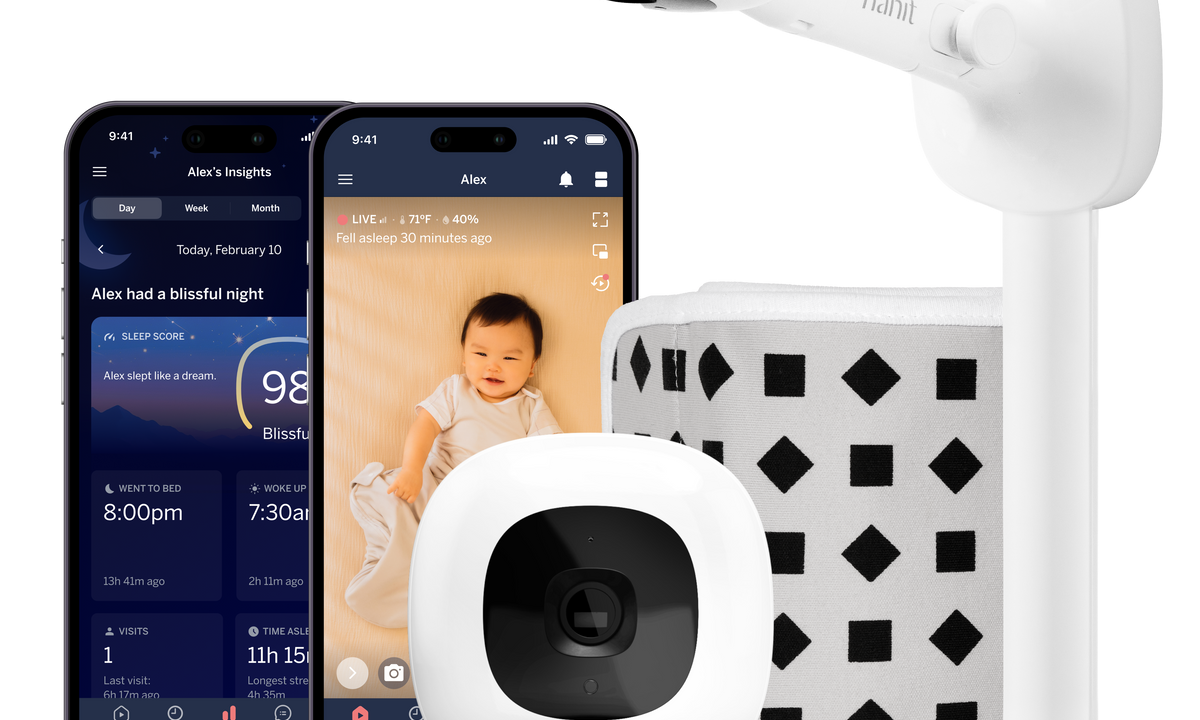
Choosing a baby monitor in 2026 means choosing between two very different ideas of what a monitor should do. On one side are the smart Wi-Fi monitors — Nanit, Owlet and CuboAi — which turn the nursery into a data dashboard, tracking sleep, breathing motion and even heart rate and oxygen. On the other side are the closed, local monitors like the Infant Optics DXR-8 Pro, which do one job — show you your baby, clearly and privately — with no app, no cloud and no monthly bill.
There is no single best baby monitor for every family. The right one depends on what keeps you up at night: sleep patterns, health worries, privacy, or simply the price. In this guide we compare five of the best baby monitors for 2026 on published specs and current pricing from the manufacturers’ own pages and independent round-ups. We have not tested these monitors hands-on. Prices were last checked on 19 Nov 2026 and vary by retailer.
One important note before we start: no baby monitor is a medical device, and no monitor prevents SIDS. The American Academy of Pediatrics advises parents not to rely on home cardiorespiratory monitors to reduce the risk of SIDS. Monitors help you see and hear what is happening so you can step in — they do not make sleep safe on their own. The Owlet Dream Sock is FDA-cleared, but that clearance covers the sock itself, not the camera and not the Duo bundle as a whole.
Contents
- Our Quick Picks
- Baby Monitors Compared
- Nanit Pro
- Owlet Dream Duo 3
- Eufy E21
- Infant Optics DXR-8 Pro
- CuboAi Plus
- Watch: Best Baby Monitors 2026
- How to Choose a Baby Monitor
- Final Verdict
- Frequently Asked Questions
Our Quick Picks
- Best overall: Nanit Pro — the best sleep analytics and the clearest overhead view, from $289.99.
- Best for health tracking: Owlet Dream Duo 3 — the FDA-cleared Dream Sock tracks pulse and oxygen, $379.99.
- Best hybrid value: Eufy E21 — Wi-Fi app plus local viewing, $259.99.
- Best without Wi-Fi: Infant Optics DXR-8 Pro — no subscription, no cloud, about $179.
- Best AI alerts: CuboAi Plus — face-covering and rollover detection, about $299.
Baby Monitors Compared
| Feature | Nanit Pro | Owlet Dream Duo 3 | Eufy E21 | Infant Optics DXR-8 Pro | CuboAi Plus |
|---|---|---|---|---|---|
| Price | From $289.99 | $379.99 | $259.99 | About $179 | About $299 |
| Video | 1080p HD | 1080p HD camera (2K on Gen 3) | 1080p HD | 720p HD | 1080p HD |
| Connection | Wi-Fi app | Wi-Fi app + Bluetooth sock | Wi-Fi + local | DECT radio, no Wi-Fi | Wi-Fi app |
| Parent unit | Phone app; optional display | Phone app | Phone app + parent unit | 5-inch parent unit included | Phone app |
| Health tracking | Breathing motion, sleep analytics | Heart rate + oxygen (Dream Sock) | Sleep and cry detection | None | Cry, face-covering, rollover alerts |
| Subscription | Optional Insights plan | Optional Owlet360, $99.99/year | Optional | None, ever | Optional CuboAi Care |
Last checked: 19 Nov 2026. Prices are the manufacturers’ listed prices and change often.
Nanit Pro — Best Overall
The Nanit Pro is the monitor most parents end up comparing everything else against. Its overhead camera — mounted on the wall or a floor stand — gives a clear top-down view of the crib, and its computer vision tracks sleep patterns, breathing motion (with the included Breathing Wear) and room temperature and humidity. The video is 1080p HD with night vision and two-way audio.
The catch is the subscription. Basic live video works without one, but the sleep analytics, video history and insights that make the Nanit special sit behind the Nanit Insights plan after the included trial. Budget for that ongoing cost when you compare prices: the camera starts at $289.99, and the full experience costs more over two or three years.
Pros: Best sleep tracking in this guide; excellent overhead camera angle; breathing motion monitoring without a wearable sensor on the baby; temperature and humidity sensing.
Cons: Meaningful features need a paid Insights plan; no parent unit in the box (phone app only, unless you buy the optional display); needs a wall mount or floor stand for the best view.
Owlet Dream Duo 3 — Best for Health Tracking

The Owlet Dream Duo 3 is the only monitor here built around a medical-grade measurement: the Dream Sock tracks your baby’s pulse rate and oxygen saturation in real time and alerts you if readings fall outside preset ranges. The sock is FDA-cleared, which is a genuine distinction — though the clearance covers the sock alone, not the camera or the Duo bundle. The bundle pairs the sock with an HD camera in a single app for $379.99.
The base app is free, with live readings and alerts included. The optional Owlet360 tier ($99.99 a year, or $9.99 a month) adds deeper sleep analysis and history. If your anxiety centres on your baby’s health rather than their sleep schedule, this is the monitor built for you.
Pros: FDA-cleared Dream Sock for heart rate and oxygen; live alerts in one app with the camera; base features work without a subscription.
Cons: The most expensive bundle here at $379.99; the sock is a wearable your baby has to tolerate every night; deepest analysis sits behind Owlet360.
Eufy E21 — Best Hybrid Value
The Eufy E21 is the quiet overachiever of this round-up. At $259.99 it undercuts the Nanit and Owlet while offering something neither does: a hybrid design that works over Wi-Fi and locally, so you can check in from your phone or from a parent unit at home. Video is 1080p HD with night vision, and the app adds cry detection and sleep summaries.
Eufy is also the brand to look at if you already own other Eufy gear — our guide to home security cameras without a subscription covers the same local-first philosophy. The E21 is a sensible middle ground: smarter than a basic radio monitor, cheaper and less subscription-heavy than the premium smart monitors.
Pros: Wi-Fi and local viewing in one system; strong price at $259.99; parent unit included; no subscription required for the basics.
Cons: Sleep analytics are lighter than Nanit’s; health tracking is limited to cry and sleep detection, not vitals.
Infant Optics DXR-8 Pro — Best Without Wi-Fi
The Infant Optics DXR-8 Pro is the monitor for parents who want nothing to do with apps, clouds or subscriptions. It uses a private DECT radio link between the camera and its 5-inch parent unit, so the video never touches the internet at all. There is no account to hack, no server outage that takes your monitor down, and no monthly fee — ever. At about $179 it is also one of the cheapest monitors here.
The trade-offs are real: 720p video is noticeably softer than the 1080p smart monitors, there is no phone app for checking in from outside the house, and there is no health or sleep tracking of any kind. The DXR-8 Pro does offer interchangeable lenses, so you can zoom in on the crib or widen the view to the whole room. If privacy and simplicity matter more to you than data, this is the pick.
Pros: No Wi-Fi, no cloud, no subscription; private DECT connection; interchangeable lenses; lowest running cost.
Cons: 720p video only; no phone app or remote viewing; no sleep or health tracking; range is limited to the house.
CuboAi Plus — Best AI Alerts
The CuboAi Plus is the most tech-forward monitor in this guide. Its 1080p camera uses on-device AI to detect face-covering, rollover and danger-zone entry, and it alerts you in the app. It also covers the basics well: a 135-degree wide-angle lens, night vision, lullabies and cry detection, for about $299. The optional CuboAi Care plan adds video history and analytics.
CuboAi suits parents who want proactive alerts rather than a dashboard of charts. The face-covering detection in particular is something no other monitor here offers, and because much of the AI runs on the device, it works even when your internet is having a bad day.
Pros: Unique face-covering and rollover alerts; wide 135-degree lens; on-device AI; good all-round feature set for the price.
Cons: Video history needs the optional Care plan; newer brand with a shorter track record than Nanit or Owlet; phone app only.
Watch: Best Baby Monitors 2026
This video compares smart Wi-Fi monitors and no-Wi-Fi monitors side by side — Owlet, Nanit, HelloBaby and Momcozy — including the subscription fine print that most round-ups skip.
How to Choose a Baby Monitor
Wi-Fi or no Wi-Fi? Wi-Fi monitors give you unlimited range and phone viewing from anywhere, but they depend on your internet and your account security. Non-Wi-Fi monitors work during an outage and keep video off the internet, but you can only watch from inside the house. If you go Wi-Fi, use a strong unique password and turn on two-factor authentication.
Add up the subscription. A $289 camera with a $120-a-year plan costs over $500 across two years. Always compare the two-year total, not just the box price. The Infant Optics DXR-8 Pro is the only monitor here with zero ongoing cost.
Match the tracking to the worry. Sleep data helps if you are trying to fix a schedule. Vitals help if health is the worry. If neither keeps you up at night, a simple video monitor and the money saved will serve you better.
Think about the nursery, not just the camera. Overhead mounting suits sleep tracking; a wide-angle lens suits a shared room; a second camera suits twins. And if you are building out the nursery as a smart home, our guide to the best smart home displays covers the screens that pair well with a monitor app.
Final Verdict
For most parents, the Nanit Pro is the best baby monitor of 2026: the best sleep analytics, the clearest overhead view, and a system that grows with your child. Buy it if you want data and are happy to pay for the Insights plan. If health tracking is what you need, the Owlet Dream Duo 3 is the only monitor here with an FDA-cleared wearable, and it is worth the $379.99. If you want no subscriptions and no cloud, the Infant Optics DXR-8 Pro at about $179 is the honest, private choice. And if you want a smart monitor without the premium price, the Eufy E21 at $259.99 is the value pick.
Frequently Asked Questions
Do I need a subscription for a baby monitor? Not always. The Infant Optics DXR-8 Pro has no subscription at all, and the Nanit, Owlet, Eufy and CuboAi monitors all work for live viewing without one. But the headline features — sleep analytics, video history, deep insights — usually sit behind a paid plan, so check the two-year total cost before you buy.
Are Wi-Fi baby monitors safe from hackers? They can be, if you set them up properly: use a strong unique password, enable two-factor authentication, keep the firmware updated, and do not share your login. Non-Wi-Fi monitors like the Infant Optics DXR-8 Pro avoid the question entirely because the video never leaves your home.
Can I use the Nanit Pro without the Insights subscription? Yes — live video, two-way audio and basic alerts work without it. What you lose is the sleep analytics, video history and breathing-motion insights, which are the main reasons most parents choose Nanit in the first place.
What is the best baby monitor for twins? Look for a system that supports a second camera in the same app or on the same parent unit. Nanit, Owlet and Eufy all support multi-camera setups; check the cost of the add-on camera, which is often sold separately.
Do baby monitors prevent SIDS? No. No home monitor has been shown to prevent SIDS, and the American Academy of Pediatrics advises against relying on cardiorespiratory monitors for that purpose. Monitors help you respond faster — they are not a substitute for safe sleep practices.