- Home
- Electronics
- Best Standing Desks 2026


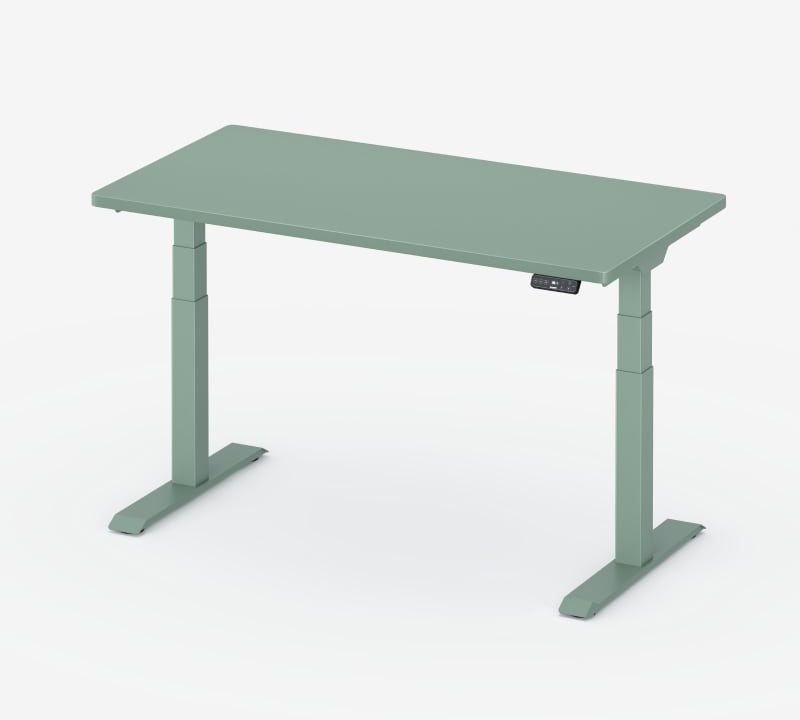
A standing desk is one of the few home-office upgrades that changes how your whole day feels. Sit for the focused work, stand for the calls, and stop ending the day with a stiff back and a sore neck. But not all standing desks are equal: cheap single-motor desks wobble at full height and strain under two monitors, while premium desks cost three times as much for stability and warranty you may never need.
In this guide we compare the best standing desks for 2026 on published specs and current pricing from the manufacturers’ own pages and independent round-ups. We have not tested these desks hands-on. Prices were last checked on 19 Nov 2026 and vary by retailer — FlexiSpot in particular runs sales most months, so the sale price is often the real price.
Contents
- Our Quick Picks
- Standing Desks Compared
- FlexiSpot E7
- FlexiSpot E7 Pro
- Uplift V3
- IKEA IDÅSEN
- FlexiSpot EN1
- Watch: FlexiSpot E7 Review
- How to Choose a Standing Desk
- Final Verdict
- Frequently Asked Questions
Our Quick Picks
- Best overall: FlexiSpot E7 — dual motors, 355 lb capacity and a 15-year frame warranty, about $299.99 on sale.
- Best for heavy setups: FlexiSpot E7 Pro — C-frame stability and a 440 lb capacity, about $399.99 on sale.
- Best premium: Uplift V3 — the most desk options and the best accessories, from $718.
- Best design: IKEA IDÅSEN — clean looks and Linak motors, about $449.
- Best budget: FlexiSpot EN1 — electric height adjustment for about $109.96.
Standing Desks Compared
| Feature | FlexiSpot E7 | FlexiSpot E7 Pro | Uplift V3 | IKEA IDÅSEN | FlexiSpot EN1 |
|---|---|---|---|---|---|
| Price | About $299.99 on sale ($349.99 list) | About $399.99 on sale ($499.99 list) | From $718 | About $449 | About $109.96 |
| Motors | Dual motor | Dual motor, C-frame | Dual motor | Dual Linak actuators | Single motor |
| Height range | 22.8–48.4 in | About 24–49 in | About 25–51 in | About 24.4–49.6 in | About 28–47 in |
| Weight capacity | 355 lb | 440 lb | 355 lb | About 154 lb | 176 lb |
| Frame warranty | 15 years | 15 years | 15 years | 10 years | 5 years |
| Best for | Most people | Heavy dual-monitor setups | Customisation | Style-led offices | Tight budgets |
Last checked: 19 Nov 2026. Prices are the manufacturers’ listed prices and change often.
FlexiSpot E7 — Best Overall
The FlexiSpot E7 is the standing desk most people should buy. It is a dual-motor, three-stage desk with a 355 lb lift capacity and a height range of 22.8 to 48.4 inches, which covers everyone from shorter users to people well over six feet. The frame alone runs about $249 to $349 depending on sales; with a top, expect about $299.99 on sale against a $349.99 list price, and up to around $599 for larger tops.
What makes the E7 the default pick is the balance: it lifts two 27-inch monitors on arms without wobbling at standing height, it has a 15-year frame warranty, and it costs hundreds less than the premium desks. It is not the prettiest desk here and the desktop options are more limited than Uplift’s, but for a home office that just needs to work, it is hard to beat.
Pros: Dual motors and 355 lb capacity; wide 22.8–48.4 in height range; 15-year frame warranty; frequently on sale around $299.99.
Cons: Fewer desktop materials and sizes than Uplift; cable management accessories cost extra; assembly takes a solid hour.
FlexiSpot E7 Pro — Best for Heavy Setups
The E7 Pro is the E7 with a C-frame base instead of a T-frame, and that change matters. The C-frame puts the feet further back, which improves stability at full height and leaves more legroom, and the lift capacity jumps to 440 lb — the highest in this guide. Height range is roughly 24 to 49 inches, and it carries the same 15-year frame warranty.
At about $399.99 on sale ($499.99 list) it costs roughly $100 more than the standard E7, and it is worth it if your desk carries a lot: dual monitors on arms, a desktop PC, speakers and a stack of books. If your setup is a laptop and a single monitor, save the money and buy the E7.
Pros: Class-leading 440 lb capacity; C-frame stability at standing height; same 15-year warranty; often $399.99 on sale.
Cons: About $100 more than the E7; heavier and bulkier to assemble; desktop range still narrower than Uplift’s.
Uplift V3 — Best Premium

Uplift‘s V2 was the desk every other standing desk was measured against for years. The V3 is its replacement, and it keeps what made the V2 great: more than 20 desktop materials in sizes from 42 to 80 inches, a 355 lb capacity, a 15-year warranty, and a deep catalogue of accessories — wire trays, drawers and CPU holders that bolt straight into the frame. Prices start from about $718 for a 48-by-30-inch desk.
The V3 is the desk to buy if you want a desk that fits your room exactly rather than the other way round, or if you are tall: the height range runs to about 51 inches, higher than the FlexiSpot desks. You pay for it — a configured V3 typically costs $150 to $400 more than an equivalent E7 — but the build quality and the options justify it for a desk you will use every day for a decade.
Pros: Widest choice of desktops and sizes; tallest height range here; excellent accessories ecosystem; 15-year warranty.
Cons: Premium pricing from $718; accessories add up fast; the V3 has less long-term owner feedback than the V2 it replaced.
IKEA IDÅSEN — Best Design
The IKEA IDÅSEN is the standing desk for people who care what their office looks like. It uses Linak dual-column actuators — the same motors found in far more expensive desks — and a clean, minimal frame that suits a living room as well as an office. It costs about $449, sits between the budget and premium picks, and comes with a 10-year warranty.
The trade-off is capacity: at about 154 lb it lifts far less than the FlexiSpot or Uplift desks, so it suits a laptop and a monitor rather than a full battlestation. It is also an IKEA desk, which means you can see it in a showroom and take it home the same day — a genuine advantage over ordering a frame online and waiting for delivery.
Pros: Best-looking desk here; quiet Linak motors; available to see and buy in store; 10-year warranty.
Cons: Only about 154 lb capacity; limited desktop sizes; fewer accessories than Uplift or FlexiSpot.
FlexiSpot EN1 — Best Budget
If $300 is too much for a desk, the FlexiSpot EN1 proves you do not have to give up electric height adjustment. At about $109.96 it is a single-motor desk with a one-piece 48-by-24-inch top, four memory presets and a 176 lb rating — enough for a monitor, a laptop and the usual desk clutter.
Single-motor desks are slower and less stable than dual-motor ones, and the EN1 is no exception: it wobbles more at full height and the motor works harder under load. But for a first standing desk, a spare room, or a setup you will not load heavily, it is a remarkable amount of desk for the money.
Pros: Electric adjustment for about $110; four memory presets; one-piece top included; good starter desk.
Cons: Single motor is slower and less stable; 176 lb capacity limits heavy setups; shorter 5-year warranty.
Watch: FlexiSpot E7 Review
This review walks through the FlexiSpot E7 in detail — stability, weight capacity and what it is like to live with day to day.
How to Choose a Standing Desk
Dual motor beats single motor. Two motors lift more smoothly, more quietly and more evenly, and they last longer under load. Single-motor desks like the EN1 are fine for light setups, but if you run two monitors, choose dual motor.
Check the height range for your body. The desk needs to go low enough for comfortable sitting and high enough for standing. As a rough guide, your elbows should sit at about 90 degrees in both positions. Tall users should look at the Uplift V3 or the E7, which reach about 48 to 51 inches.
Capacity is about stability, not just weight. A desk rated for 355 lb will feel steadier at standing height with 60 lb on it than a desk rated for 176 lb carrying the same load. If you use monitor arms, capacity matters even more because the load sits high and far from the centre.
Budget for the whole setup. A desk is the start, not the end: a monitor arm, a cable tray and an anti-fatigue mat make the difference between a desk you stand at and a desk you actually enjoy standing at. Our guides to the best gaming desks and the best gaming chairs under $300 cover the rest of the setup.
Final Verdict
For most home offices, the FlexiSpot E7 is the best standing desk of 2026: dual motors, a 355 lb capacity, a wide height range and a 15-year warranty for about $299.99 on sale. If your desk carries a heavy dual-monitor setup, step up to the E7 Pro for its C-frame and 440 lb capacity. If you want the widest choice of sizes and materials and the best accessories, the Uplift V3 is worth the premium from $718. And if the budget is tight, the FlexiSpot EN1 at about $110 gets you a genuine electric standing desk for the price of a fixed one.
Frequently Asked Questions
Are standing desks actually good for your back? Alternating between sitting and standing can reduce the stiffness that comes from sitting all day, but standing all day is not the answer either. The evidence supports movement and variety: stand for calls and short tasks, sit for focused work, and move around regularly.
How much weight can a standing desk hold? It depends on the desk. Budget single-motor desks hold about 154 to 176 lb, mid-range dual-motor desks hold about 355 lb, and the FlexiSpot E7 Pro holds 440 lb. Check the rating against everything you plan to put on the desk, including monitor arms.
What size standing desk should I buy? A 48-by-24-inch top fits a single monitor and a laptop comfortably. For dual monitors, a keyboard tray or a desktop PC on the desk, go for 55 to 60 inches wide and 28 to 30 inches deep.
Is the Uplift V2 still worth buying? The V2 was the benchmark premium desk for years, and it remains a good desk if you find one on sale. But Uplift has replaced it with the V3, which is the current model with the latest frame and the full accessory range — buy the V3 unless the V2 discount is large.
How long does a standing desk take to assemble? Plan for one to two hours with a second person helping, especially for the heavier dual-motor frames. The desktop is the awkward part: it is heavy, and you need space to flip the desk upright.