- Home
- Electronics
- Prime vs Zoom Lenses: Which Gl ...


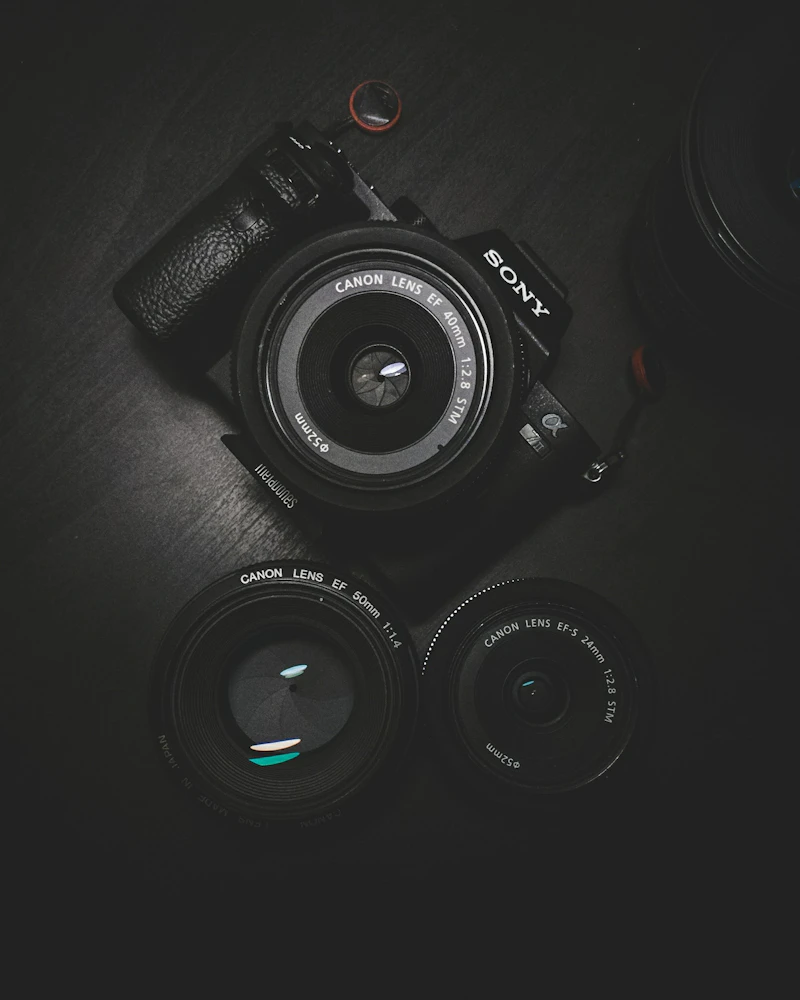
When purchasing your first mirrorless or DSLR camera, you inevitably encounter the most critical optical crossroads in photography: should your very first lens investment be a fast, fixed focal length Prime Lens (such as the legendary ‘Nifty Fifty’ 50mm f/1.8) or a versatile, multi-focal Zoom Lens (such as a 24-70mm or 18-50mm f/2.8)?
Lenses dictate the character, sharpness, low-light capability, and visual compression of your photography far more than the camera body itself. While zoom lenses offer the undeniable convenience of reframing a composition with a twist of the wrist, prime lenses provide massive maximum apertures (f/1.4 and f/1.8) that swallow light in dark environments and melt backgrounds into creamy, cinematic bokeh. In this comprehensive beginner’s optical guide, we break down aperture physics, composition discipline (‘zooming with your feet’), low-light shutter speeds, and financial investment strategies to help you choose the right glass foundation.
Table of Contents
- Aperture & Light Transmission: f/1.8 vs f/2.8 vs Variable f/3.5-5.6
- Creative Discipline: Why ‘Zooming with Your Feet’ Makes You a Better Photographer
- Optical Sharpness & Distortion: Simple Elements vs Complex Glass Groups
- Event Agility & Unpredictability: When Zooms are Non-Negotiable
- Size, Weight, and Street Invisibility: The Travel Burden
- The Master Beginner Lens Investment Strategy & Verdict
- In Conclusion

Aperture & Light Transmission: f/1.8 vs f/2.8 vs Variable f/3.5-5.6
To understand why photographers obsess over prime lenses, one must examine the mathematics of aperture f-stops. As explored in our Action Cameras Ranked: GoPro Hero vs DJI Osmo Action vs Insta360 Ace Pro study, the f-number represents the ratio of the lens focal length divided by the diameter of the entrance pupil (f = F / D).
A lower f-number indicates a physically wider aperture opening. The difference between an f/1.8 prime lens and a standard f/3.5-5.6 kit zoom is staggering: an f/1.8 aperture allows four times more physical light to hit the camera sensor than an f/3.5 lens, and over eight times more light than an f/5.6 zoom at full telephoto.
In real-world shooting, this extra light gathering enables shooting handheld indoor portraits, birthday parties, and candlelit dinners at ISO 800 with sharp 1/125s shutter speeds, whereas a slow kit zoom would force the camera to ISO 6400 or 12800, muddying faces with grain and motion blur.
| Aperture Setting | Relative Light Transmission | Typical Lens Category | Low-Light Performance | Background Blur (Bokeh) |
|---|---|---|---|---|
| f/1.4 (Ultra-Fast Prime) | 100% (Maximum light transmission) | High-end professional prime (e.g. 50mm f/1.4) | Exceptional (Shoot in near darkness) | Paper-thin depth of field; extreme creamy blur |
| f/1.8 (Fast Prime) | 64% of f/1.4 (Very high light) | Affordable 'Nifty Fifty' primes ($150 – $250) | Superb (Great indoor natural light) | Gorgeous, creamy subject separation |
| f/2.8 (Constant Pro Zoom) | 25% of f/1.4 (Two full stops less) | Pro Zoom Trinity (24-70mm f/2.8) | Very Good (Workhorse event standard) | Moderate pleasing background separation |
| f/4.0 (Constant Travel Zoom) | 12.5% of f/1.4 | Compact travel zoom (24-105mm f/4) | Moderate (Requires stabilization / flash) | Subtle background blur |
| f/3.5 – 5.6 (Variable Kit Zoom) | 6.2% to 3.1% at telephoto | Cheap plastic kit lens included in camera box | Poor indoors (Forces high ISO noise) | Minimal blur; busy background distraction |
Creative Discipline: Why ‘Zooming with Your Feet’ Makes You a Better Photographer
A subtle but profound advantage of prime lenses is how they train the photographer’s eye. When a beginner uses a zoom lens, they tend to stand motionless in one spot, twisting the zoom ring to frame subjects. This frequently leads to lazy, eye-level compositions that feel uninspired and flat.
Shooting with a fixed prime lens forces you to ‘zoom with your feet’. You must physically move closer, step backward, drop to your knees for a dramatic low angle, or climb stairs for a bird’s-eye perspective. You become intimately familiar with the exact perspective of your focal length.
Within two weeks of shooting exclusively with a 35mm or 50mm prime, your brain begins to visualize frames before you even lift the camera to your eye, developing strong compositional instincts and visual voice far faster than zoom-dependent beginners.
| Shooting Mindset | Fixed Prime Lens (35mm / 50mm) | Versatile Zoom Lens (24-70mm) | Learning Impact |
|---|---|---|---|
| Physical Movement | Active (Constant repositioning, kneeling, angles) | Passive (Standing in place, twisting zoom ring) | Primes build stronger spatial awareness |
| Pre-Visualization | High (You see the frame naturally with your eyes) | Low (Framing decided after looking through glass) | Primes accelerate photographic instinct |
| Creative Constraint | Forces finding creative angles within fixed frame | Infinite framing choices can cause decision fatigue | Constraint fosters creative problem solving |
| Speed of Reframing | Slower (Must physically run or walk) | Instantaneous (Twist ring in 0.5 seconds) | Zooms win decisively for fast live events |
Optical Sharpness & Distortion: Simple Elements vs Complex Glass Groups
Optical design is an uncompromising engineering compromise. To make a lens that zooms from 24mm wide-angle to 70mm telephoto, engineers must pack 15 to 20 complex glass lens elements into multiple moving groups.
Every additional glass element introduces internal air-to-glass light reflections, chromatic aberration (purple fringing on high-contrast tree branches), and barrel/pincushion distortion. To keep the lens manageable in size, corners can exhibit softness and optical vignetting.
A prime lens is engineered for one single focal length. With only 6 to 9 optimized glass elements, light passes through with minimal diffraction and refraction. Even an affordable $200 50mm f/1.8 prime lens will routinely out-resolve and produce sharper center-to-corner edge clarity than a $1,500 professional zoom lens stopped down to the same aperture.
| Optical Parameter | Budget 50mm f/1.8 Prime (~$200) | Professional 24-70mm f/2.8 Zoom (~$1,800) | Optical Rationale |
|---|---|---|---|
| Center Sharpness | Pin-sharp from f/2.8 upward | Extremely Sharp across zoom range | Prime matches or beats pro zoom center |
| Corner / Edge Sharpness | Very Sharp (Minimal distortion) | Good (Minor corner softness at extremes) | Fewer moving optical groups in prime |
| Geometric Distortion | Near Zero (Natural linear perspective) | Noticeable barrel at 24mm, pincushion at 70mm | Zooms require heavy digital distortion correction |
| Chromatic Aberration / Fringing | Very Low (Special ED elements) | Well-controlled, but visible in corners | Primes exhibit cleaner contrast borders |
Event Agility & Unpredictability: When Zooms are Non-Negotiable
Despite the optical purity and low-light brilliance of prime lenses, there are photographic genres where using prime lenses alone is professional suicide: weddings, live sports, photojournalism, and wildlife safaris.
During a wedding ceremony, the bride walks down the aisle in fifteen seconds. A photographer standing at the altar cannot ‘zoom with their feet’—stepping backward would collide with the altar, and running forward blocks the guests’ view.
With a 24-70mm f/2.8 or 70-200mm f/2.8 zoom, the photographer captures a wide shot of the bride and father walking in, zooms in instantly for an emotional close-up of a tear on the father’s cheek, and zooms out for the exchange of vows—all within three seconds from the exact same physical position without changing lenses.
| Photography Scenario | Prime Lens Practicality | Zoom Lens Practicality | Winner |
|---|---|---|---|
| Wedding Ceremony (Fast Moments) | High Risk (Must swap bodies/lenses constantly) | 10 / 10 (Instant framing from wide to tight) | Zoom Lens (Essential for events) |
| Outdoor Wildlife / African Safari | Impractical (Animals move unpredictably) | 10 / 10 (100-400mm tracks galloping game) | Zoom Lens (Mandatory for wildlife) |
| Controlled Portrait Session / Studio | 10 / 10 (Sublime bokeh, ultimate sharpness) | 8.5 / 10 (Great, but f/2.8 bokeh is flatter) | Prime Lens (King of portraits) |
| Night Street Photography | 10 / 10 (Discreet, tiny size, f/1.4 light) | 6.0 / 10 (Heavy, slow f/2.8 in dim alleys) | Prime Lens (King of low-light street) |
Size, Weight, and Street Invisibility: The Travel Burden
How a camera feels dangling from your neck for seven hours walking the cobblestone streets of Rome or Tokyo dictates whether you bring your camera along or leave it locked inside your hotel room safe.
Prime lenses are delightfully compact. A classic 35mm f/1.8 or 50mm f/1.8 prime weighs between 170 and 280 grams and extends barely two inches from the camera mount. Your camera looks like an unassuming tourist point-and-shoot: subjects do not tense up, and street photography candid moments feel natural and un-staged.
A professional 24-70mm f/2.8 zoom weighs 800 to 950 grams and extends over five inches, acting like a giant visual megaphone that screams ‘paparazzi / professional photographer’ the moment you lift it in public spaces.
| Lens Silhouette | Average Weight | Physical Length | Neck Fatigue After 5 Hours | Candid Street Discretion |
|---|---|---|---|---|
| Nifty Fifty Prime (50mm f/1.8) | 180 – 280 grams (Featherweight) | 50 – 65 mm (Pancake / short) | Zero Fatigue (Wear all day comfortably) | 10 / 10 (Discreet, non-threatening) |
| Classic 35mm f/1.8 Street Prime | 200 – 310 grams | 60 – 75 mm | Zero Fatigue | 10 / 10 (Beloved by street photojournalists) |
| Standard Pro Zoom (24-70mm f/2.8) | 820 – 950 grams (Heavy brick) | 120 – 140 mm (Extends when zooming) | High Fatigue (Requires padded strap) | 4 / 10 (Very conspicuous and intimidating) |
| Compact Travel Zoom (28-75mm f/2.8) | 540 grams (Tamron / Sigma hybrid) | 117 mm | Moderate (Great middle-ground) | 7 / 10 (Manageable for travel) |
The Master Beginner Lens Investment Strategy & Verdict
For 95% of photographers starting their creative journey, the golden lens acquisition blueprint is remarkably straightforward and universally proven.
Step 1: Purchase your camera body paired with an affordable, high-quality standard prime lens: the legendary ‘Nifty Fifty’ (50mm f/1.8) or a versatile 35mm f/1.8. For under $250, this single lens will immediately unlock the magical creamy bokeh backgrounds, tack-sharp detail, and low-light shooting freedom that your smartphone could never achieve.
Step 2: After shooting with your prime for several months, you will naturally discover your shooting style. If you crave wider landscapes and event versatility, invest in a constant-aperture 24-70mm or 18-50mm f/2.8 zoom. If you fall in love with portraiture and street candids, expand your prime arsenal with an 85mm f/1.8 portrait telephoto.
Starting with a fast prime builds fundamental photographic discipline while delivering maximum image quality per dollar.
| Lens Milestone | Recommended Lens Choice | Typical Price Range | Primary Skill Unlocked |
|---|---|---|---|
| 1. First Essential Lens Purchase | 50mm f/1.8 or 35mm f/1.8 Prime Lens | $150 – $250 | Low-light exposure, shallow depth of field, foot composition |
| 2. Second Step: Event / Travel Zoom | 18-50mm f/2.8 (APS-C) or 28-75mm f/2.8 (Full-Frame) | $549 – $899 | Rapid framing agility, environmental landscapes, travel flexibility |
| 3. Third Step: Specialty Portrait | 85mm f/1.8 or 56mm f/1.4 Portrait Prime | $350 – $550 | Facial compression, stunning headshots, melting background bokeh |
| 4. Fourth Step: Telephoto Action | 70-200mm f/4 or 70-300mm Telephoto Zoom | $600 – $1,400 | Sports sidelines, wildlife compression, landscape isolating |
✓ What We Love
- Prime lenses feature wide apertures (f/1.4 – f/1.8) that swallow four to eight times more light than kit zooms
- Wide prime apertures produce gorgeous, creamy background blur (bokeh) that isolates human subjects beautifully
- Prime lenses have simpler optical designs with fewer glass elements, yielding superior edge-to-edge sharpness
- Featherweight 200g prime lens profiles eliminate neck fatigue and provide discreet street photography invisibility
- Shooting with a fixed focal length trains compositional discipline and visual pre-visualization far faster
✗ Things to Consider
- Prime lenses cannot change focal length; fast-moving events and weddings require carrying multiple bodies or swapping lenses
- Zoom lenses offer unmatched convenience when physical barriers prevent you from stepping closer or further
Price Comparison
Looking for the Best Deals on Prime & Zoom Camera Lenses?
Don’t overpay. Compare real-time prices across major online retailers before buying.
In Conclusion
Lenses are the true artistic brushes of the photographic craft. While camera bodies come and go with each silicon cycle, extraordinary glass endures for decades, shaping light and shadow into unforgettable visual memories.
Starting your creative path with a fast 35mm or 50mm prime lens will teach you how to see light, master depth of field, and compose with physical intentionality. Once your compositional instincts are forged, pairing your primes with a versatile f/2.8 zoom lens creates a complete, professional photographic toolkit ready for any moment in life.