- Home
- Electronics
- Best Electric Bikes for Commut ...


An electric bike can turn a miserable commute into the best part of the day — no traffic, no parking hunt, no sweaty arrival. This guide compares the best electric bikes for commuting in 2026 on published manufacturer specifications and current store prices, so you can match the bike to your actual ride, not the marketing.
Prices below are US store prices. Prices move constantly, so treat the figures as a snapshot — last checked: 19 Nov 2026. One important note: the Aventon Level 3, a long-time commuter favourite, was discontinued in October 2026. Its replacement, the Level 4 REC, leads this guide.
Contents
- Best commuter e-bikes at a glance
- Aventon Level 4 REC — best overall commuter
- Velotric Discover 2 — best for comfort
- RadCity 5 Plus — best value, with a caveat
- Lectric XP4 — best folding commuter
- Ride1Up Turris — best budget commuter
- What to check before you buy
- Watch: the best commuter e-bikes of 2026
- Final verdict
- Frequently asked questions
Best commuter e-bikes at a glance
| E-bike | Motor | Claimed range | Class | Price* |
|---|---|---|---|---|
| Aventon Level 4 REC | 750W hub, 80 Nm | Up to 75 miles | Class 2 / 3 | $1,799 |
| Velotric Discover 2 | 750W hub | Up to 75 miles | Class 2 / 3 | $1,499 |
| RadCity 5 Plus | 750W hub | 28–50 miles | Class 2 | $1,499 |
| Lectric XP4 | 500W hub | Up to 85 miles (XP4 750) | Class 2 / 3 | $999 |
| Ride1Up Turris | 750W hub | 30–50 miles | Class 2 / 3 | $1,395 |
*Prices are US store prices, last checked: 19 Nov 2026. Range figures are manufacturer claims and vary with rider weight, terrain and assist level.
Aventon Level 4 REC — best electric bike for commuting overall
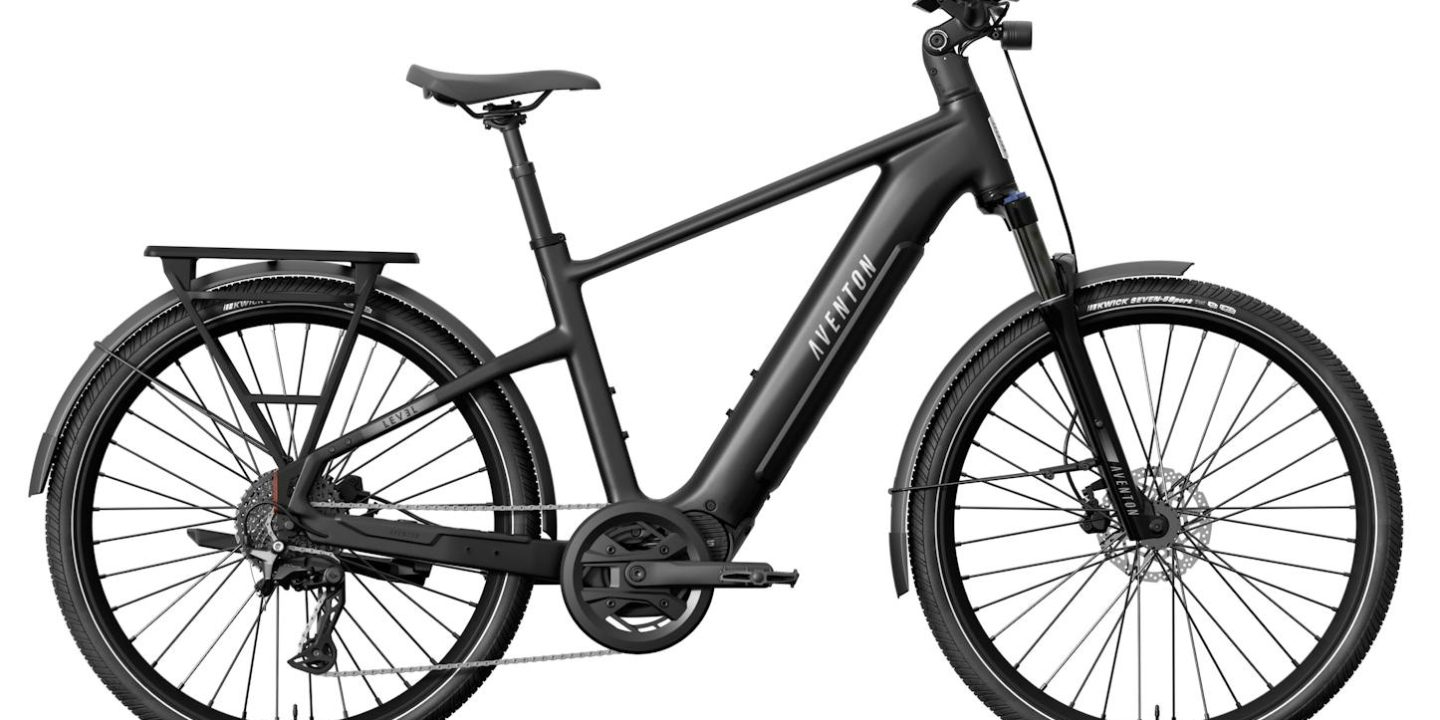
The Aventon Level 4 REC is the direct replacement for the discontinued Level 3, and it is a genuine step up. The 750W rear hub motor peaks at 1,188W (1,440W in Boost mode) with 80 Nm of torque, the 733Wh LG battery is rated for up to 75 miles, and regenerative braking — rare on a hub-drive commuter — feeds a little energy back on descents. It ships commuter-ready with an integrated rear rack, fenders and lights, and the colour display pairs with Aventon’s app for ride tuning, navigation and GPS tracking (free for the first year, then a paid subscription).

On Aventon’s US store the Level 4 REC is listed at $1,799 on sale, down from $1,999. Independent testers recorded 44.2 miles at maximum assist — the longest in their group — so treat the 75-mile claim as a low-assist figure. At 68.5 lb it is heavy to carry, and the GPS subscription is an ongoing cost to factor in.
What we love: Strong 750W motor with Boost mode, regenerative braking, up to 75-mile claimed range, rack and fenders included. Considerations: 68.5 lb is heavy to lift, GPS becomes a paid subscription after year one, $1,799 is not cheap.
Velotric Discover 2 — best electric bike for commuting in comfort
The Velotric Discover 2 is the comfort-first commuter in this guide. It pairs a 750W hub motor with a 705.6Wh battery rated for up to 75 miles on pedal assist (60 miles on throttle), hydraulic disc brakes, and a suspension fork that takes the edge off rough city streets. Velotric fits torque-sensor pedal assist, which feels more natural than the cadence sensors on cheaper bikes — the motor follows how hard you pedal rather than simply switching on and off. It is priced at $1,499 on sale, down from a $1,999 list price, which undercuts the Aventon Level 4 REC by $300 for a similar specification.
Where the Discover 2 gives ground is in the details: no regenerative braking, a smaller dealer network than Aventon, and a slightly less polished app. If your commute is mostly flat city streets and you value a smooth, natural ride over raw hill-climbing power, the Discover 2 is the better buy — and the $300 saving buys a very good lock and helmet.
What we love: Torque sensor feels natural, suspension fork, $1,499 undercuts the Aventon, easy step-through frame. Considerations: No regenerative braking, smaller dealer network, app is less polished.
RadCity 5 Plus — best value commuter, with a caveat
The RadCity 5 Plus has been the default recommendation for city commuters for years: a 750W rear hub motor, a 672Wh battery with a claimed 28–50 miles of range, hydraulic disc brakes, and fenders, lights and an integrated rear rack included. It is an upright, comfortable bike that is easy to ride in normal clothes, and it is listed at $1,499 on sale (from $1,699) on Rad Power Bikes’ store. Independent testers have praised its braking in particular — Electric Bike Report recorded the best stopping distance of any e-bike they had reviewed.
Here is the caveat, and it matters: Rad Power Bikes filed for Chapter 11 bankruptcy protection in 2026 while seeking a buyer, and has been closing retail stores. The bike itself is unchanged and well made, but warranty support and proprietary parts depend on the company’s future. If you buy one, buy it at the $1,499 sale price and check that a local service partner exists near you before ordering.
What we love: Upright and comfortable, excellent brakes, rack, fenders and lights included, $1,499 sale price. Considerations: Rad Power Bikes is in Chapter 11 — warranty and parts are uncertain, claimed range is modest, 65 lb is heavy.
Lectric XP4 — best folding electric bike for commuting
The Lectric XP4 is the only folding bike in this guide, and that changes what a commute can look like: fold it at the station, carry it onto the train, stash it under your desk. The 500W base model costs $999 on Lectric’s US store and still includes a torque sensor, hydraulic brakes, a detachable colour display with USB-C, turn signals and a 150 lb rear rack — a specification that would have cost twice as much three years ago. The XP4 750, with a 750W motor and a larger 840Wh battery rated for up to 85 miles, costs $1,299.
Folding bikes always compromise somewhere, and here it is ride quality: 20-inch wheels and a folding frame feel less planted than the full-size bikes above. But for a mixed commute — ride, train, ride — nothing else here works at all, and Lectric is the best-selling e-bike brand in the US, with a large owner community and good parts availability.
What we love: Folds for trains and offices, $999 is the cheapest bike here, torque sensor and hydraulic brakes included. Considerations: Small wheels feel less stable, 500W motor struggles on steep hills, heavier than it looks when folded.
Ride1Up Turris — best budget electric bike for commuting
The Ride1Up Turris is the quiet value pick of this guide. For $1,395 you get a full-size commuter with a 750W hub motor, a 672Wh battery with a claimed range of 30–50 miles, hydraulic disc brakes, and fenders and lights included. It is a Class 2 bike convertible to Class 3, so it can keep up with 28 mph traffic where local rules allow. Ride1Up sells direct, which is how the price stays low, and the Turris has been one of the brand’s steady sellers for several years.
The trade-offs are the usual ones for a direct-sales brand: no test rides unless you find an owner nearby, and servicing depends on local bike shops rather than a dealer network. The display and app are basic compared with Aventon’s. But the core of the bike is sound, and for a rider who knows what they want and does not need hand-holding, $1,395 for a 750W hydraulic-brake commuter is hard to beat.
What we love: 750W and hydraulic brakes for $1,395, full-size 27.5-inch wheels, rack and fenders included. Considerations: Direct sales only — no test rides, basic display and app, servicing depends on local shops.
What to check before you buy
Know your e-bike class. Class 1 is pedal assist to 20 mph, Class 2 adds a throttle to 20 mph, Class 3 is pedal assist to 28 mph. Local rules decide which classes can use bike lanes and paths — check before you buy, because it varies by city and state.
Halve the claimed range. Manufacturer range figures assume a light rider, flat ground and low assist. A realistic planning figure is roughly half the claim in mixed real-world riding, less in winter or on hills. If your round trip is 30 miles, buy a bike claimed for 60.
Weigh the bike, not just the price. These bikes weigh 60–70 lb. If your commute involves stairs, a train or a car rack, that weight matters every single day. The Lectric XP4 folds, but it is still heavy to carry folded.
Check servicing before ordering. E-bikes need brake, tyre and drivetrain work like any bike, plus occasional electrical diagnosis. A brand with a dealer or service partner near you — Aventon and Velotric both have networks — is worth real money over three years of ownership.
Budget for a lock. A $1,500 e-bike needs a $100–$150 lock, minimum. Add lights if they are not included, a helmet, and waterproof panniers, and the real first-year cost is $200–$300 above the bike itself.
Commuting by e-bike pairs well with a portable power station for charging at work — see the best portable power stations.
Watch: the best commuter e-bikes of 2026
Electric Bike Report’s 2026 commuter roundup tests 17 daily rides, including the Aventon Level 4 REC, and explains how range, hill climbing and braking were measured.
Final verdict
The best electric bike for commuting in 2026 is the Aventon Level 4 REC. At $1,799 on sale it is the most complete commuter here: a strong 750W motor with Boost mode, regenerative braking, a 75-mile claimed range, and a dealer network that will still exist when you need a service. If comfort matters more than power, the Velotric Discover 2 saves you $300 and rides more smoothly. The RadCity 5 Plus remains a lovely bike, but Rad Power Bikes’ Chapter 11 filing means you should only buy it at the sale price and near a service partner. The Lectric XP4 is the only choice if your commute involves a train, and the Ride1Up Turris is the best budget full-size commuter.
Frequently asked questions
How far can an e-bike really go on one charge? Roughly half the manufacturer’s claimed range in real-world riding. A bike claimed for 75 miles will typically manage 35–45 miles with a heavier rider, hills and higher assist levels. Plan your round trip against half the claim.
Do I need a licence or insurance for an e-bike? In most US states, Class 1, 2 and 3 e-bikes need no licence, registration or insurance, and can use bike lanes. Rules vary by state and city, and some places restrict Class 3 bikes on certain paths — check local rules before buying.
Can I ride an e-bike in the rain? Yes. The bikes in this guide are built for all-weather commuting, with sealed electronics and hydraulic disc brakes that work well wet. Dry and clean the chain after wet rides, and store the battery indoors in winter.
Is the Aventon Level 3 still available? No — Aventon discontinued the Level 3 in October 2026. Remaining stock may exist at dealers, but the current model is the Level 4 REC, which replaces it with a stronger motor, regenerative braking and a longer claimed range.
How much does it cost to charge an e-bike? Very little. A full charge of a 733Wh battery costs roughly $0.12 at average US electricity prices, and a daily 10-mile commute costs under $10 a year in electricity.
Prices and specifications: last checked: 19 Nov 2026. Check the manufacturer’s own store for the current price before ordering. See also: Aventon Level 4 REC, Velotric Discover 2, Lectric XP4.