

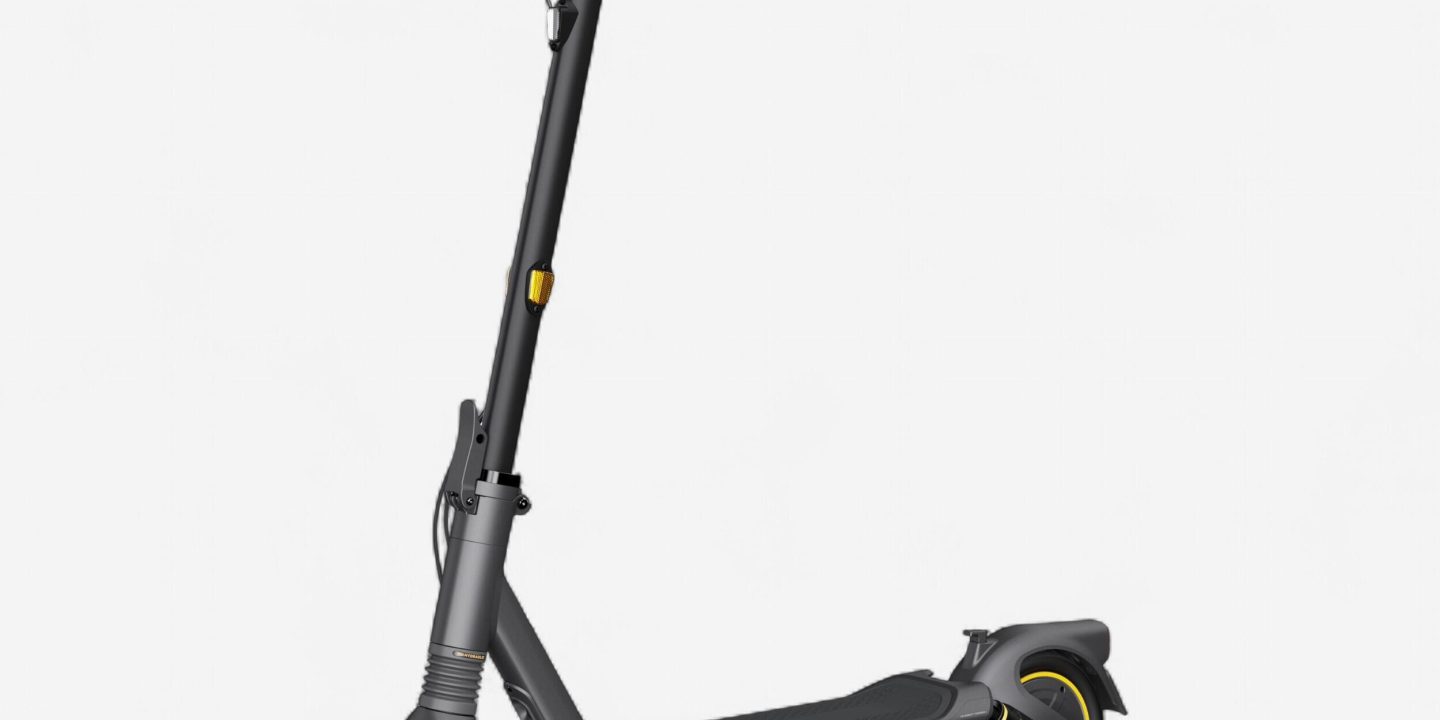
Electric scooters have grown up. The best commuter scooters of 2026 are no longer toys: they have proper suspension, self-healing tyres, app-connected security and enough range to cover a working week of commuting on one charge. But the numbers on the box are optimistic — real-world range is usually 60 to 70 percent of the rated figure — and weight matters as much as speed if you have to carry it upstairs. This guide compares the best electric scooters for commuting in 2026 on manufacturer specs, independent test results and current prices, so you can match a scooter to your actual route.
Prices below are typical US retailer or manufacturer list prices — last checked: 19 Nov 2026 — and scooters go on sale often, so check the current price before you buy. Always wear a helmet, and check your local rules: speed limits and where scooters may legally be ridden vary by city and country.
Contents
- Best electric scooters for commuting at a glance
- Segway Ninebot Max G2 — best overall commuter
- NIU KQi3 Max — best range for the money
- Xiaomi Electric Scooter 4 Pro — best lightweight commuter
- Hiboy S2 Pro — best budget commuter
- Apollo City — best premium commuter
- Rated range vs real range: what to expect
- What to check before you buy
- Watch: the Segway Ninebot Max G2 tested
- Final verdict
- Frequently asked questions
Best electric scooters for commuting at a glance
| Scooter | Rated range | Top speed | Weight | Price* |
|---|---|---|---|---|
| Segway Ninebot Max G2 | Up to 43 miles | 22 mph | 53.5 lb | About $630–$1,000 |
| NIU KQi3 Max | Up to 40.4 miles | 20 mph | About 46 lb | $999 list, often $650–$800 |
| Xiaomi Electric Scooter 4 Pro | Up to 34 miles | 16 mph | About 37.5 lb | About $499 |
| Hiboy S2 Pro | Up to 25 miles | 19 mph | About 40 lb | About $423–$470 |
| Apollo City | Up to 28 miles | 32 mph | About 57 lb | About C$1,000–C$1,250 |
*Prices are typical US retailer or manufacturer list prices (Apollo City priced in Canadian dollars), last checked: 19 Nov 2026. Rated range is the manufacturer’s figure; expect 60–70% of it in everyday riding.
Segway Ninebot Max G2 — best overall commuter
The Segway Ninebot Max G2 is the commuter benchmark in 2026, and it wins on the combination that matters for daily riding: range, comfort and security. Segway rates it at up to 43 miles from a 551Wh battery, with a 450W motor peaking at 1,000W, a 22 mph top speed, and front and rear suspension that takes the edge off potholes and rough roads. The 10-inch self-healing tubeless tyres seal small punctures automatically. It also has turn signals, traction control and Apple Find My built in. Independent testing by RiderGuide measured 26.6 miles of real range and a 21.7 mph top speed — comfortably the longest tested range in its class.

The Max G2 lists at $1,399.99 but Segway’s own store has sold it at $629.98, and street prices in 2026 generally run $700 to $1,000 depending on sales. The trade-offs are weight and charging: at 53.5 lb it is a handful to carry upstairs, and a full charge takes about six hours with no fast-charge option. If you rarely carry it, nothing else here is as complete.
What we love: longest tested real-world range, proper front and rear suspension, self-healing tyres, Apple Find My, turn signals, UL 2272 certified. Considerations: heavy at 53.5 lb, six-hour charge, 22 mph cap is software-locked.
NIU KQi3 Max — best range for the money
The NIU KQi3 Max is the value long-range pick: NIU rates it at 40.4 miles of range and a 20 mph top speed, from a 500W motor with 900W peak output and a large 608Wh battery. It rides on wide 9.5-inch tubeless pneumatic tyres, stops with a triple braking system (disc, drum and regenerative), and carries riders up to 265 lb. NIU’s own store lists it at $999, but it is frequently discounted to around $650 to $800, which makes it the most range per dollar in this guide.
It beats the Max G2 on hills and value: the bigger battery and strong motor handle gradients and heavier riders with less fuss, and independent tests logged around 30 miles of real range. It loses on comfort — no proper suspension, so rough roads feel rougher — and it is heavy at around 46 lb. If your route is long and hilly and your budget is under $800, this is the scooter to buy.
What we love: 40.4-mile rated range, strong hill climbing, triple braking, wide comfortable deck, frequently discounted well below list. Considerations: no suspension, heavy, top speed lower than some rivals.
Xiaomi Electric Scooter 4 Pro — best lightweight commuter
The Xiaomi Electric Scooter 4 Pro is the pick for commuters who have to carry their scooter. It squeezes a 446Wh battery into a frame of about 17 kg (37.5 lb) — the best range per kilogram in this guide — with a rated range of up to 34 miles (55 km) from a 400W motor. It folds quickly, has 10-inch pneumatic tyres, and costs around $499, which makes it the cheapest way to get a genuinely useful commuter range.
The compromises are speed and suspension: top speed is limited to about 16 mph in many markets, and there is no suspension, so it suits smooth city streets rather than rough roads. Availability and warranty support can be patchy outside Xiaomi’s main markets, so confirm both before buying. For a flat, short commute with stairs at either end, the weight saving is worth more than the extra range.
What we love: lightest in this guide at about 37.5 lb, best range per kilogram, around $499, quick fold. Considerations: no suspension, modest top speed, warranty support varies by region.
Hiboy S2 Pro — best budget commuter
The Hiboy S2 Pro proves you do not need to spend $1,000 to commute by scooter. It costs about $423 to $470, and for that you get a 500W rated motor, a 417.6Wh battery, a rated range of up to 25 miles, a 19 mph top speed, 10-inch honeycomb tyres that cannot puncture, rear suspension, and an app with ride modes and a lock function. It weighs about 40 lb and is UL 2272 certified.
Real-world range is more like 15 to 19 miles — still plenty for a short commute — and the honeycomb tyres trade some comfort for zero flats. The build and app feel budget next to Segway and NIU, and the 220 lb rider limit is lower than the premium models. But as a first scooter or campus commuter, it delivers most of the experience for less than half the price.
What we love: about $423–$470, puncture-proof honeycomb tyres, rear suspension, app controls, UL 2272 certified. Considerations: 15–19 miles of real range, 220 lb rider limit, budget feel next to premium rivals.
Apollo City — best premium commuter
The Apollo City is the premium pick for riders who want more speed and a faster charge. It pairs a 960Wh battery with dual spring suspension, self-sealing tubeless tyres and a triple braking system, and it is one of the few commuters with a genuine fast-charge accessory: about 4.5 hours standard, or two to three hours with Apollo’s fast charger. Top speed is about 32 mph, with a rated range of around 28 miles. It costs about C$1,000 to C$1,250 in Canada, where Apollo is based, and the faster City Pro sells for around $1,300 in the US.
Apollo’s direct customer support is a genuine advantage over marketplace brands, and build quality and ride comfort are a step above the budget models. The downsides are weight (about 57 lb) and price, and the fast charger costs extra. Buy it if your commute is long, fast or rough and you want the most capable machine here.
What we love: 960Wh battery, dual suspension, fast-charge option, triple braking, direct customer support. Considerations: premium price, heavy at about 57 lb, fast charger sold separately.
Rated range vs real range: what to expect
Every range figure here is the manufacturer’s rated number, measured with a light rider on flat ground at a steady speed. In everyday riding, expect 60 to 70 percent of it: the Max G2’s rated 43 miles works out at roughly 27 to 30 miles in independent tests, and the KQi3 Max’s 40.4 miles at roughly 26 to 30. Hills, cold weather, rider weight and top-speed riding cut range further. Buy a scooter rated for at least 50 percent more range than your daily round trip, so you are never nursing the battery home.
What to check before you buy
First, measure your real route: distance, hills and how much carrying is involved, then buy for range and weight in that order. Second, check the rider weight limit — premium models carry 265 lb, budget models often 220 lb. Third, look for UL 2272 certification, which covers electrical and battery safety — a meaningful mark in a category with real fire-safety concerns. Fourth, think about tyres: self-healing or honeycomb tyres mean fewer punctures, while pneumatic tyres ride more comfortably. Fifth, confirm warranty and parts support in your country before buying, especially for Xiaomi and Apollo. Finally, budget for a helmet, a good lock and lights if they are not included — and check whether your city allows scooters on roads, bike lanes or pavements, because the rules vary widely.
See also our guide to the best drones under $500, our best portable power stations guide for charging on the go, and our best GPS watches under $300 for tracking your commute. Manufacturer pages: Segway on the Ninebot Max G2 and NIU on the KQi3 Max.
Watch: the Segway Ninebot Max G2 tested
This full review puts the Max G2 through independent range and speed testing, and explains why it became the commuter benchmark:
Final verdict
For most commuters, the Segway Ninebot Max G2 is the best electric scooter of 2026: the longest tested real-world range, proper suspension, self-healing tyres and Apple Find My make it the easiest daily driver to live with. If your route is long or hilly and your budget is tighter, the NIU KQi3 Max gives you nearly as much range for less money. If you carry your scooter upstairs, the Xiaomi 4 Pro is the lightest useful commuter. If money is tight, the Hiboy S2 Pro covers a short commute for under $500. And if you want the fastest, most capable machine, the Apollo City is the premium pick. Whichever you buy, size it for your real range — not the number on the box — and wear a helmet.
Frequently asked questions
How far can an electric scooter really go on one charge?
Expect 60 to 70 percent of the rated range. The Max G2 is rated at 43 miles but tested at about 27 miles; the KQi3 Max is rated at 40.4 miles and tested at around 26 to 30 miles. Hills, cold weather, rider weight and top-speed riding all reduce range.
What is the best electric scooter for commuting?
The Segway Ninebot Max G2 is the best all-round commuter in 2026, with the longest tested range, suspension and self-healing tyres. The NIU KQi3 Max is the best value long-range alternative, and the Xiaomi 4 Pro is the best choice if you need to carry the scooter.
Do I need a licence or insurance for an electric scooter?
It depends where you live. Rules vary widely by country, state and city: some places treat scooters like bicycles, others require registration, insurance or a licence, and some ban them from pavements or roads entirely. Check your local rules before buying.
Are electric scooters safe?
Choose a UL 2272 certified scooter, wear a helmet, keep tyres at the right pressure, and avoid heavy rain unless your scooter is rated for it. The Max G2 is rated IPX5; the KQi3 Max is IP54.
How long does an electric scooter battery last?
Most scooter batteries last several hundred charge cycles — roughly three to five years of daily commuting — with range gradually declining. Storing the scooter indoors and avoiding full discharges helps the battery last longer.