- Home
- Electronics
- Best Smart TVs Over $500 in 20 ...


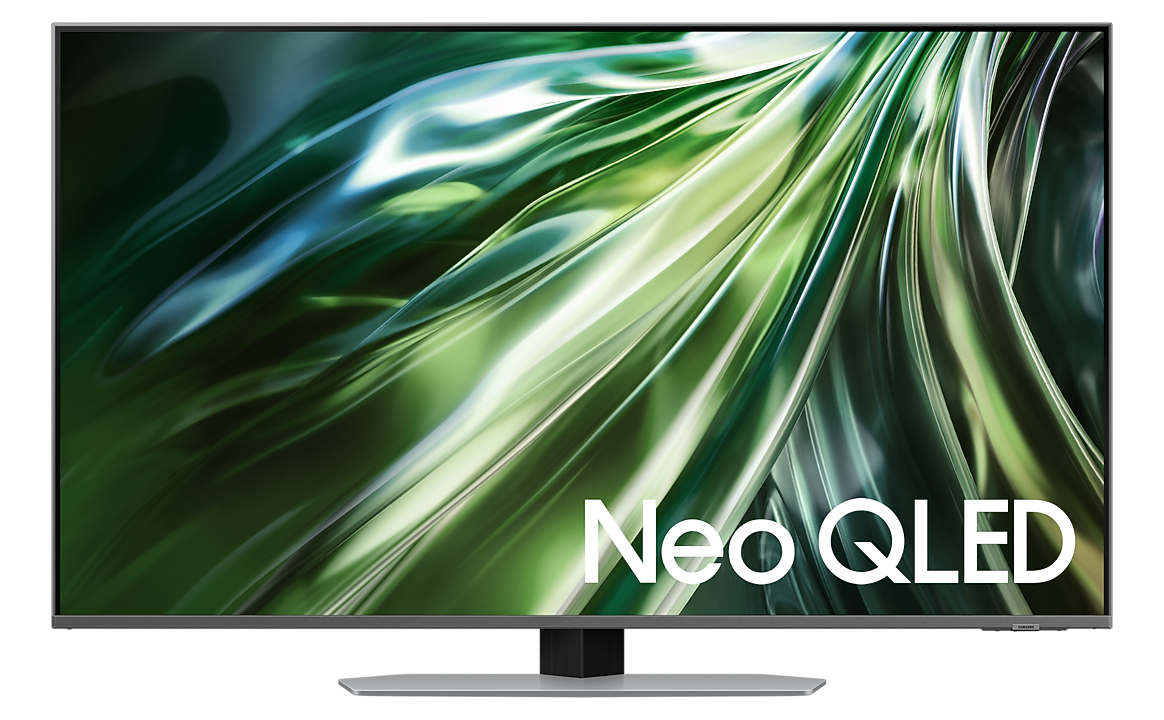
Crossing the $500 line changes what a television can do. Below it you get a good picture; above it you get a great one — self-lit OLED pixels with perfect blacks, Mini-LED backlights with thousands of dimming zones, and 144Hz panels made for modern consoles. The five TVs in this guide all cost more than $500, and every one of them earns the extra money in a different way. We compared them on published manufacturer specifications and current retailer prices.
Prices below are for the size listed with each model. Prices move constantly, especially around sales events, so treat the figures as a snapshot — last checked: 19 Nov 2026.
Contents
- Best smart TVs over $500 at a glance
- LG C4 OLED — best picture overall
- Samsung QN90D — best for bright rooms
- Sony Bravia 7 II — best for colour and processing
- Hisense U8N — best value Mini-LED
- TCL QM8 — best budget step-up
- What to check before you buy
- Watch: the best smart TVs of 2026
- Final verdict
- Frequently asked questions
Best smart TVs over $500 at a glance
| TV | Panel | Refresh rate | HDR | Price* |
|---|---|---|---|---|
| LG C4 OLED (55″) | OLED evo | 144Hz | Dolby Vision, HDR10 | About $1,029 |
| Samsung QN90D (65″) | Neo QLED Mini-LED | 144Hz | HDR10+ | About $1,595 |
| Sony Bravia 7 II (55″) | True RGB Mini-LED | 120Hz | Dolby Vision, HDR10 | $1,499.99 |
| Hisense U8N (65″) | Mini-LED ULED | 144Hz | Dolby Vision IQ, HDR10+ | About $999–$1,099 |
| TCL QM8 (65″) | QD-Mini LED | 144Hz | Dolby Vision, HDR10+ | About $799–$899 |
*Prices are typical US prices for the size shown, last checked: 19 Nov 2026. Sale prices are often lower.
LG C4 OLED — best smart TVs over $500 for picture quality
The LG C4 is the TV everything else in this guide is measured against. Its OLED evo panel has more than 8 million self-lit pixels, which means each pixel makes its own light and can switch fully off — so black is genuinely black, not dark grey, and contrast is effectively infinite. The 55-inch model (OLED55C4PUA) is listed by LG at $1,999.99, but it regularly sells for around $1,029 at US retailers, which makes it the cheapest way into a proper OLED in 2026. It runs on LG’s α9 AI Processor Gen7, supports Dolby Vision and Dolby Atmos, and its webOS platform covers every major streaming app.
For gaming it is hard to beat: four HDMI 2.1 ports, a 144Hz refresh rate, VRR, NVIDIA G-Sync and AMD FreeSync Premium, and a 0.1ms response time. The trade-off is brightness. OLED cannot match a Mini-LED set in a sun-drenched room, and if the same news channel or game HUD sits on screen for hours every day, OLED panels carry a small long-term burn-in risk that LCD sets simply do not have. For a living room used mainly in the evening, though, nothing else here looks this good.
What we love: Perfect blacks and infinite contrast, four HDMI 2.1 ports, 144Hz gaming, Dolby Vision. Considerations: Less bright than Mini-LED rivals, small burn-in risk with static images, LG list price is far above street price.
Samsung QN90D — best smart TVs over $500 for bright rooms
If your living room has big windows, buy the Samsung QN90D. Its Neo QLED panel uses Quantum Matrix Mini-LED backlighting, which packs thousands of tiny LEDs behind the screen for searing brightness and tight local dimming, and Samsung’s anti-glare coating keeps reflections under control in daylight. The 65-inch model launched from $1,499 and typically sells for around $1,595 at US retailers. It runs Samsung’s NQ4 AI Gen2 processor, supports 4K at 144Hz for PC gaming, and has Object Tracking Sound+ with Dolby Atmos built in.

The QN90D is also the most complete smart TV here for Samsung households: Tizen OS includes the Gaming Hub, Samsung TV Plus with hundreds of free channels, and easy pairing with Galaxy phones and Samsung soundbars. The one format gap is Dolby Vision — Samsung does not support it, offering HDR10+ instead. Picture quality in a dark room is a step behind the LG C4, because even the best Mini-LED backlight cannot switch off individual pixels the way OLED can.
What we love: Outstanding brightness and anti-glare, 144Hz gaming, strong built-in sound, Tizen Gaming Hub. Considerations: No Dolby Vision, dark-room contrast trails OLED, premium price at 65 inches.
Sony Bravia 7 II — best smart TVs over $500 for colour and processing
The Sony Bravia 7 II is the newest TV in this guide, a 2026 model built around Sony’s True RGB Mini-LED backlight, which uses separate red, green and blue LEDs instead of the usual blue LEDs with a quantum-dot layer. Sony says this gives more accurate colour at wide viewing angles, and it is paired with the XR Processor with AI scene recognition. The 55-inch model (K55XR70M2) was listed at $1,499.99 on Sony’s own US store in October 2026, down from a $2,099.99 reference price. It runs Google TV with Gemini voice search, supports Dolby Vision, Dolby Atmos, IMAX Enhanced and DTS:X, and includes Sony Pictures Core with a bundle of movies.
For PlayStation 5 owners there are exclusive features — Auto HDR Tone Mapping and Auto Genre Picture Mode switch settings automatically when a console is detected — and HDMI 2.1 brings 4K at 120Hz, VRR and ALLM, though VRR is limited to HDMI ports 3 and 4. The Bravia 7 II is the most expensive 55-inch TV here, and at this size you are paying for processing and colour accuracy rather than screen area.
What we love: True RGB colour, superb processing, Google TV with Gemini, PS5 features. Considerations: Pricey at 55 inches, VRR only on two HDMI ports, 120Hz rather than 144Hz.
Hisense U8N — best value Mini-LED over $500
The Hisense U8N is the value play of this whole guide. The 65-inch model (65U8N) sells for around $999–$1,099, and for that you get a Mini-LED ULED panel with a peak brightness Hisense rates at up to 3,000 nits, a native 144Hz panel with Game Mode Pro, Dolby Vision IQ and HDR10+, four HDMI ports (two full-bandwidth HDMI 2.1), and a 2.1.2-channel speaker system that is the most capable built-in audio in this group. It runs Google TV and even includes a NEXTGEN TV (ATSC 3.0) tuner and Wi-Fi 6E.
That specification list reads like a TV costing twice the price, and in a bright room the U8N genuinely competes with sets far above it. The compromises: Hisense’s software support history is shorter than LG’s or Samsung’s, and only two of the four HDMI ports run at full 4K 144Hz bandwidth. None of that matters much at this price. If you want a big, bright 65-inch TV and the OLED and Sony premiums feel hard to justify, this is the sensible buy.
What we love: 65 inches for around $1,000, up to 3,000-nit brightness, 144Hz gaming, every HDR format. Considerations: Only two full-bandwidth HDMI 2.1 ports, software support track record is shorter, interface can feel sluggish.
TCL QM8 — best budget step-up over $500
The TCL QM8 is the cheapest way over the $500 line into a genuinely premium-feeling TV. The 65-inch model typically sells for around $799–$899, and it packs QD-Mini LED backlighting with roughly 1,000 local dimming zones, a 144Hz panel with VRR, Dolby Vision and HDR10+, and Google TV. TCL’s panel is bright enough for daytime viewing, and the Bang & Olufsen-tuned audio on some variants is a rare inclusion at this price.
Compared with the Hisense U8N above, the QM8 gives up some peak brightness and dimming-zone count, and its picture processing is a step behind the big three brands — fast sports and dark film scenes are where you will notice it. But it costs roughly $200 less than the U8N for the same 65-inch size, and it comfortably outclasses every TV under $500 in our companion guide. If your budget tops out below $900 and you want the biggest, brightest screen that money buys, the QM8 is the pick. Pair it with one of the best soundbars under $300 and you have a proper home cinema for not much more than $1,000.
What we love: 65-inch QD-Mini LED for under $900, 144Hz and VRR, Dolby Vision, Google TV. Considerations: Dimmer than the U8N, processing trails LG, Samsung and Sony, two HDMI 2.1 ports only.
What to check before you buy
OLED or Mini-LED? OLED wins in dark rooms, with perfect blacks and the widest viewing angles. Mini-LED wins in bright rooms, with far higher peak brightness and no burn-in worry. There is no wrong answer — there is only the room you actually watch in.
Size matters more than features. A 65-inch Mini-LED at $1,000 will feel more cinematic than a 55-inch OLED at the same money. Measure your wall and your viewing distance first; as a rough guide, sit about 1.5 times the screen’s diagonal away.
Count the HDMI 2.1 ports. A PS5 or Xbox Series X and a soundbar can use two high-bandwidth ports between them. The LG C4 has four; most rivals here have two. If you own two consoles and a soundbar, check the port layout before you buy.
If your budget is tighter, our guide to the best smart TVs under $500 covers what $500 buys in 2026. And if you game on a desk rather than a sofa, see the best gaming monitors under $200.
Watch: the best smart TVs of 2026
Prefer to watch? This roundup walks through the top smart TVs of 2026, including the LG C4 and Samsung QN90D, and explains which one fits different rooms and budgets.
Final verdict
For most buyers, the LG C4 is the best smart TV over $500 in 2026. At around $1,029 for the 55-inch model it delivers a picture no Mini-LED set can match in a dark room, plus the best gaming specification in this group. If your room is bright, get the Samsung QN90D instead. The Sony Bravia 7 II is the connoisseur’s choice for colour and processing, while the Hisense U8N is the smartest use of $1,000 in this guide. And if you want the most screen for the least money, the TCL QM8 at around $800 is hard to argue with.
Whichever you choose, remember that prices move fast — check the current price on the manufacturer’s own store before ordering, and measure your wall before you fall in love with a screen size.
Frequently asked questions
Is OLED or Mini-LED better for a bright living room? Mini-LED. OLED panels like the LG C4 have perfect blacks but lower peak brightness, while Mini-LED sets like the Samsung QN90D and Hisense U8N reach far higher brightness and handle reflections better.
Do I need a 144Hz TV? Only if you game on a PC or a current console at high frame rates. For films and streaming, 60Hz and 120Hz panels look identical, because almost all video content is 24 or 60 frames per second.
Why is the LG C4 so much cheaper than its list price? LG lists the 55-inch C4 at $1,999.99, but retailers discount it heavily because it is a 2024 model and newer OLEDs have arrived. The $1,029 street price is real and widely available — it is not a clearance fluke.
Does the Samsung QN90D support Dolby Vision? No. Samsung supports HDR10+ instead of Dolby Vision. Most streaming services offer both formats, so this rarely affects what you can watch, but Dolby Vision-only content will play in standard HDR10 on a Samsung TV.
What size TV should I buy? Buy the biggest screen your room and budget allow. At typical viewing distances of 2–3 metres, a 65-inch TV suits most living rooms, and the step from 55 to 65 inches is the single biggest upgrade you can make.
Prices and specifications: last checked: 19 Nov 2026. Check the manufacturer’s own store for the current price before ordering. See also: LG C4 OLED, Samsung QN90D, Sony Bravia 7 II, Hisense U8N.