- Home
- Electronics
- Best True Wireless Earbuds for ...



The true wireless earbud market has matured from a fragile, battery-compromised experiment into an essential piece of everyday personal tech. In 2026, premium wireless in-ear monitors pack advanced computational active noise cancellation, dynamic dual-driver acoustic chambers, lossless Bluetooth codec streaming, and intelligent spatial audio with head tracking into enclosures weighing less than six grams each.
However, selecting the perfect pair is intricately tied to your smartphone operating system. Apple’s H2 silicon confers exclusive perks on iOS devices, while Android users unlock uncompressed high-resolution LDAC and Qualcomm aptX Lossless transmission. In this definitive guide, we test the Apple AirPods Pro 2 (USB-C), Sony WF-1000XM5, Samsung Galaxy Buds 3 Pro, and Sennheiser Momentum True Wireless 4 across acoustic resolution, microphone wind rejection, and daily ear-canal ergonomics.
Table of Contents
- Acoustic Drivers & Sound Quality: Dynamic vs Dual-Driver Systems
- Active Noise Cancellation in Tiny Enclosures: In-Ear Silicon vs Foam Tips
- Microphone Beamforming, Wind Protection, and Call Intelligibility
- Ecosystem Lock-in: iOS, Android, and Multipoint Bluetooth
- Battery Endurance, Wireless Charging, and Case Ergonomics
- The Master TWS Ranking Matrix: Which Pair Fits Your Daily Life?
- In Conclusion
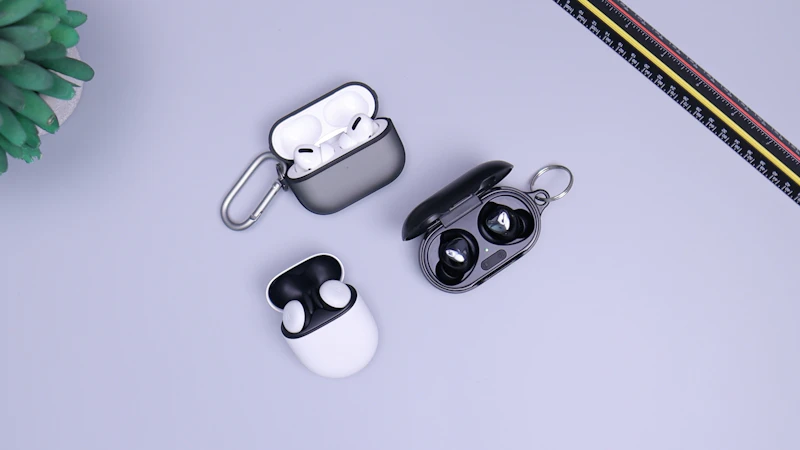
Acoustic Drivers & Sound Quality: Dynamic vs Dual-Driver Systems
Acoustic reproduction in miniature earbud enclosures depends on driver architecture. As explored in our Best True Wireless Earbuds for iPhone and Android: Sound Quality, ANC & Call Clarity review, single dynamic drivers must reproduce the entire 20Hz to 20kHz audible range, which can lead to intermodulation distortion at elevated volumes.
The Samsung Galaxy Buds 3 Pro and Sennheiser Momentum True Wireless 4 address this through dual-driver architecture, pairing a large dynamic woofer for tight, authoritative bass with a dedicated planar magnetic or balanced armature tweeter for pristine high-frequency shimmer and vocal presence.
Sony’s WF-1000XM5 employs an upgraded 8.4mm Dynamic Driver X featuring a dome-and-edge separation structure made from different composite materials. This delivers rich, textured sub-bass and an expansive in-head soundstage, especially when streaming 24-bit/96kHz tracks via Sony’s LDAC codec on Android devices.
| Earbud Model | Driver Configuration | Supported Codecs | Max Bitrate | Tuning Target |
|---|---|---|---|---|
| Apple AirPods Pro 2 (USB-C) | Custom High-Excursion Dynamic Driver | AAC, SBC (Apple Lossless over Vision Pro) | 320 kbps (2.4GHz Apple Protocol) | Harman Neutral (Dynamic EQ) |
| Sony WF-1000XM5 | 8.4mm Dynamic Driver X | LDAC, LC3, AAC, SBC | 990 kbps (High-Res Audio) | Warm, bass-forward, textured |
| Samsung Galaxy Buds 3 Pro | Dual Driver (10mm Woofer + Planar Tweeter) | Samsung Seamless Codec (SSC 24-bit/96kHz), AAC | 512 kbps (Ultra High Quality) | V-shaped energetic, crisp treble |
| Sennheiser Momentum TW 4 | 7mm TrueResponse Dynamic Transducer | aptX Lossless, aptX Adaptive, LC3, AAC | Up to 1.1 Mbps (CD Lossless) | Audiophile neutral, wide separation |

Active Noise Cancellation in Tiny Enclosures: In-Ear Silicon vs Foam Tips
Active noise cancellation in earbuds requires an airtight physical acoustic seal. Even the most powerful digital algorithms cannot cancel exterior noise if ambient sound leaks past your ear tips into your ear canal.
Sony includes custom polyurethane foam ear tips with the WF-1000XM5. When squeezed into the ear canal, the foam expands to create extraordinary passive noise isolation, blocking high-frequency clatter that traditional silicone cannot damp. Combined with Sony’s dual processors (V2 and QN2e), the XM5 dampens train and bus rumble exceptionally well.
Apple’s AirPods Pro 2 utilize vented silicone tips that eliminate the uncomfortable ‘plugged-ear’ sensation. Apple’s H2 chip samples ambient audio 48,000 times per second, offering miraculous low-frequency cancellation and the most natural, transparent ‘Transparency Mode’ in the audio industry.
| Earbud Model | Tip Material | Ear Pressure Vents | Subway Rumble Reduction | Transparency Mode Quality |
|---|---|---|---|---|
| Apple AirPods Pro 2 | Silicone with acoustic mesh vents | Yes (Zero ear-pressure) | -28.4 dB | 10 / 10 (Indistinguishable from open ears) |
| Sony WF-1000XM5 | Polyurethane Noise-Isolation Foam | Micro-vents | -30.2 dB (Highest isolation) | 8.8 / 10 (Very natural speech) |
| Bose QC Ultra Earbuds | Silicone stability band + oval tips | Passive release | -31.0 dB (Best low bass reduction) | 8.5 / 10 (Noticeable white noise floor) |
| Samsung Buds 3 Pro | Silicone oval tips with Blade lights | Yes | -27.1 dB | 9.0 / 10 (Clean ambient pass-through) |

Microphone Beamforming, Wind Protection, and Call Intelligibility
Nothing is more frustrating on a work call than your colleagues complaining about passing cars or wind buffeting. In-ear microphones sit inches away from your mouth, requiring sophisticated bone-conduction voice sensors and AI beamforming algorithms to isolate your vocal chords from background clamor.
Samsung’s Galaxy Buds 3 Pro and Apple’s AirPods Pro 2 employ downward-facing stems that point beamforming microphones directly toward your mouth. This physical proximity combined with machine-learning voice isolation makes them superior for taking professional calls outdoors.
Sony moved away from stems on the WF-1000XM5, instead integrating deep bone-conduction sensors that detect skull vibrations when you speak. While this filters out coffee shop background noise remarkably well, your voice can sound slightly muffled or processed in windy environments.
| Earbud Model | Microphone Array | Stem Architecture | Outdoor Wind Handling | Call Audio Warmth |
|---|---|---|---|---|
| Apple AirPods Pro 2 | Dual beamforming + Inward mic + Bone sensor | Yes (Stem down) | Excellent (Adaptive noise mesh) | Natural, articulate, clear |
| Samsung Galaxy Buds 3 Pro | 3 Mics + VPU (Voice Pickup Unit) | Yes (Blade stem design) | Excellent (AI Deep Voice filter) | Crisp, elevated vocal presence |
| Sony WF-1000XM5 | 3 Mics per bud + Bone conduction sensor | No (In-ear round bud) | Moderate (Wind mesh helps, but processed) | Warm, but slightly robotic in noise |
| Sennheiser Momentum TW 4 | 3 Beamforming mics per side | No (Round enclosure) | Good (Dedicated wind mode in app) | Clear, slightly distant in traffic |
Ecosystem Lock-in: iOS, Android, and Multipoint Bluetooth
Modern earbuds are tightly coupled with their parent software platforms. Buying AirPods Pro 2 if you own a Google Pixel or Samsung Galaxy means forfeiting firmware updates, spatial audio head tracking, ear tip fit tests, and battery status widgets.
Conversely, the Sony WF-1000XM5 and Sennheiser Momentum True Wireless 4 are platform-agnostic champions. They provide feature-complete companion apps on both Google Play and the iOS App Store, complete with 5-band parametric equalizers and genuine multi-device Bluetooth Multipoint.
Bluetooth Multipoint allows your earbuds to connect simultaneously to your MacBook or Windows laptop and your smartphone. When an incoming phone call arrives, the audio switches instantly from your YouTube video on the computer to your mobile phone without entering Bluetooth menus.
| Earbud Model | Ecosystem Native | Multi-Device Switching | Cross-Platform App | Spatial Audio Tracking |
|---|---|---|---|---|
| Apple AirPods Pro 2 | Apple Ecosystem (iOS / macOS) | Seamless Apple iCloud Switching (No standard multipoint) | No Android app (Severely limited) | Apple Personalized Spatial Audio (iOS only) |
| Samsung Buds 3 Pro | Samsung Galaxy Ecosystem | Samsung Seamless Auto-Switch + Auracast | Galaxy Wearable (Android only, no iOS app) | Samsung 360 Audio with head tracking |
| Sony WF-1000XM5 | Universal (Android / iOS / Windows) | Universal Bluetooth Multipoint (2 devices) | Full-Featured Sony Headphones Connect (Both OS) | Sony 360 Reality Audio (Universal) |
| Sennheiser TW 4 | Universal (Android / iOS / PC) | Universal Bluetooth Multipoint + Auracast Ready | Smart Control App (iOS & Android) | Standard stereo / Virtual spatial |

Battery Endurance, Wireless Charging, and Case Ergonomics
Battery longevity in TWS earbuds is twofold: single-charge bud runtime and total case backup capacity. Because miniature lithium-ion cells degrade after 500 charge cycles, larger battery reserves translate to a longer usable product lifespan.
Sony’s WF-1000XM5 dominates single-charge longevity, delivering up to 8 continuous hours of playback with ANC enabled (and 12 hours with ANC off), with the compact charging case providing an additional 16 hours of reserve power.
Apple and Samsung deliver 6 hours of continuous ANC playback per charge, backed by approximately 24 to 30 hours from their pocketable Qi/MagSafe wireless cases. Apple’s case also features an integrated speaker that chimes loudly when locating lost earbuds via the Apple Find My network.
| Earbud Model | Bud Battery (ANC ON) | Case Capacity | Total Playback | Wireless Charging & Tracking |
|---|---|---|---|---|
| Sony WF-1000XM5 | 8.0 Hours | 16 Hours (2 full recharges) | 24 Hours Total | Qi Wireless + Google Fast Pair |
| Apple AirPods Pro 2 | 6.0 Hours | 24 Hours (4 full recharges) | 30 Hours Total | MagSafe + Apple Watch Charger + U1 Find My Speaker |
| Samsung Buds 3 Pro | 6.0 Hours (7 hrs ANC off) | 20 Hours | 26 Hours Total | Qi Wireless + Wireless PowerShare |
| Sennheiser TW 4 | 7.5 Hours | 22.5 Hours | 30 Hours Total | Qi Wireless + Battery Protection Mode |
The Master TWS Ranking Matrix: Which Pair Fits Your Daily Life?
Selecting the premier wireless earbuds comes down to your smartphone and listening environment. If you carry an iPhone, the Apple AirPods Pro 2 (USB-C) remain the most cohesive, convenient, and acoustically natural daily audio companion on the planet.
For Android users—especially those streaming high-resolution audio on Tidal, Qobuz, or Apple Music—the Sony WF-1000XM5 delivers superior acoustic detail, unbeatable polyurethane foam passive seal, and industry-leading 8-hour battery longevity.
If you value high-fidelity instrument separation above all else, Sennheiser’s Momentum True Wireless 4 provides the most authentic studio-grade sound reproduction in an earbud form factor.
| Rank & Earbud Model | Ideal User Profile | Sound Profile | MSRP Tier | Final Score |
|---|---|---|---|---|
| 1. Apple AirPods Pro 2 (USB-C) | iPhone / Mac Users seeking seamless integration | Harman Neutral, crystal transparency | $249 (Deals at $189) | 9.7 / 10 (Best for iOS) |
| 2. Sony WF-1000XM5 | Android users & travelers wanting maximum ANC | Warm audiophile bass, LDAC streaming | $299 (Deals at $249) | 9.5 / 10 (Best for Android) |
| 3. Samsung Galaxy Buds 3 Pro | Samsung Galaxy flagship phone owners | Vivid dual-driver acoustic sparkle | $249 | 9.1 / 10 (Best for Samsung) |
| 4. Sennheiser Momentum TW 4 | Audiophiles prioritizing lossless fidelity | Clinical, wide, authentic soundstage | $299 | 9.0 / 10 (Best Pure Audio) |
✓ What We Love
- Apple AirPods Pro 2 delivers unbeatable transparency mode and seamless iOS/macOS integration
- Sony WF-1000XM5 polyurethane foam tips provide extraordinary passive and active acoustic isolation
- Samsung Galaxy Buds 3 Pro dual-driver array delivers sparkling high-frequency detail and tight bass punch
- Universal Bluetooth Multipoint on Sony and Sennheiser allows simultaneous laptop and phone connections
- Advanced spatial audio with dynamic head-tracking creates immersive 3D cinema soundscapes
✗ Things to Consider
- Apple AirPods Pro 2 lacks high-resolution LDAC or aptX Lossless codec support on non-Apple devices
- Polyurethane foam tips on Sony WF-1000XM5 require periodic replacement every 6 to 9 months as foam wears
Price Comparison
Looking for the Best Deals on True Wireless Earbuds?
Don’t overpay. Compare real-time prices across major online retailers before buying.
In Conclusion
True wireless earbuds have become indispensable lifestyle tools, blending computational audio, health sensors, and active noise suppression into pocket-sized marvels. Choosing the right pair requires matching the earbud’s proprietary silicon and Bluetooth codecs to your smartphone operating system.
Whether you invest in the effortless ecosystem harmony of Apple’s AirPods Pro 2, the high-resolution acoustic mastery of the Sony WF-1000XM5, or the dual-driver precision of Sennheiser, premium wireless earbuds deliver private acoustic sanctuaries wherever life takes you.